




FDA Tightens Data Requirements for PLA/PBAT Packaging
On July 27, 2026, the U.S. FDA updated its guidance for bio-based food contact materials, introducing a more document-intensive compliance requirement for compostable PLA/PBAT packaging entering the market through import channels. The change matters because it shifts the discussion from broad material claims to verifiable degradation pathways and underlying migration test records, with direct implications for resin suppliers, packaging exporters, North American buyers, procurement screening, and shipment readiness ahead of the October 1, 2026 enforcement date.
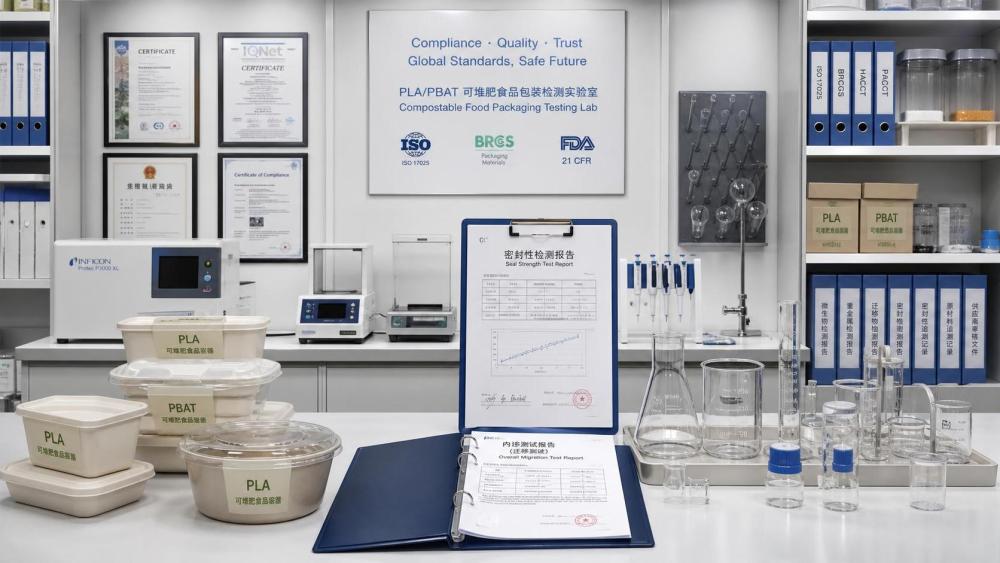
What the FDA update now requires
According to the information provided, the FDA issued the Bio-based Food Contact Materials Guidance Update on July 27, 2026. Under this update, importers of compostable food contact packaging made from PLA/PBAT will be required, starting October 1, 2026, to submit complete documentation covering two areas.
First, the shipment must include anaerobic and aerobic degradation pathway reports validated under ISO 14855 and ISO 17088. Second, it must include the underlying raw data for comprehensive migration testing covering fatty, ethanol, and acidic simulants. The stated impact of the revision is that it directly affects export compliance preparation by global PLA/PBAT resin suppliers and customer onboarding or purchasing access procedures in North America.
Where the pressure is likely to appear across the chain
Export readiness moves upstream to resin and material suppliers
From an industry perspective, suppliers of PLA/PBAT resins and related packaging materials are likely to feel the first operational pressure because the new requirement centers on technical proof rather than marketing-level compostability positioning. What deserves closer attention is that degradation pathway validation and raw migration data are not interchangeable documents; exporters may therefore need to confirm whether their existing technical files are sufficient for customer submission packages and import review.
Import and procurement teams face a stricter entry screen
For importers and purchasing teams, the change appears likely to affect supplier qualification, document collection, and order approval timing. Analysis shows that access to North American procurement channels may increasingly depend on whether a supplier can provide ISO-validated degradation reports together with complete migration testing data for the specified simulants, rather than relying only on product declarations or summary-level test conclusions.
Testing and compliance service work may become more document-driven
Testing organizations and compliance support providers may also be affected because the updated requirement points to a need for documentation that is both technically complete and submission-ready. Observably, the key issue is not only whether tests exist, but whether the underlying records can support importer filings and buyer review in a format acceptable for compliance checks tied to food contact packaging.
Delivery planning may be affected where documentation is incomplete
For supply chain and delivery coordination, the practical issue is timing. If required reports or raw data are missing, incomplete, or not aligned with buyer expectations, the effect could appear in pre-shipment review, procurement release, or customer approval steps. It is more appropriate to understand this as a documentation and market-access issue rather than a simple labeling update.
What companies should check now
Review whether existing technical files match the new evidentiary standard
Analysis shows that companies involved in PLA/PBAT food contact packaging should first examine whether current dossiers include both ISO 14855/17088-validated degradation pathway reports and the full raw data sets for migration testing with fatty, ethanol, and acidic simulants. A summary certificate alone may not address the requirement described in the update.
Reconfirm customer-facing submission packages before October 1
What deserves closer attention is the handoff between technical compliance files and commercial shipment documents. Exporters, importers, and buyers may need to review whether supplier onboarding materials, product approval files, and transaction documents are consistent with the updated FDA guidance before the effective date arrives.
Track how procurement and qualification language begins to change
Observably, one of the near-term watch points will be whether procurement requirements, supplier qualification forms, or tender-related technical documentation begin to incorporate the new evidence standard more explicitly. The input does not provide detailed implementation language beyond the guidance update itself, so this remains an area to monitor rather than a confirmed outcome.
Prepare for closer traceability around testing records
From an industry perspective, companies should also pay attention to internal traceability for test reports and raw data. Because the update specifically refers to original migration testing data, businesses may need to ensure that the records attached to a product, batch, or supply relationship can be retrieved and presented consistently during customer review or import compliance preparation.
Why this looks like an execution signal, not just a headline
Analysis shows that this update is more than a general policy statement because it introduces a defined effective date and names the documentary evidence expected for PLA/PBAT compostable food contact packaging. At the same time, it would be premature to treat every downstream consequence as settled fact, since the input does not include detailed enforcement interpretations, case examples, or buyer implementation practices. It is more appropriate to understand the development as a concrete compliance signal with immediate relevance for document preparation, while still leaving room for further observation on execution standards and market response.
How the market is likely to read this change
In practical terms, the update points to a higher threshold for proving both degradation behavior and food contact migration performance in import-related workflows for PLA/PBAT packaging. The industry significance lies less in the announcement alone and more in the shift toward verifiable, submission-ready technical evidence. Current observation suggests this should be read as a landed compliance change with short-term operational consequences, while the exact pace of implementation across procurement and trade channels still warrants continued monitoring.
Basis of this article and what still needs verification
This article is based on the user-provided news title, event date, and event summary. For developments of this kind, commonly relevant source categories may include official regulatory announcements, releases from supervisory authorities, customs or trade administration notices, industry association updates, standards organization documents, and reporting by established professional media. No specific official source link was provided in the input, so the exact official publication link still needs to be verified on an ongoing basis. Continued attention should also be paid to any later clarification on detailed implementation, certification interpretation, procurement document changes, market feedback, and company-level execution.
Have questions about this sector analysis, or seeking best practices specific to your niche? Drop us a line below and let the senior consultants at APIM assist you.
We respect your privacy. Your information is strictly confidential.
Related News
- 00
0000-00
Do polyolefin hot melt adhesives bond well to polyethylene? - 00
0000-00
Korean Study Finds PLA Barely Degrades in Landfill After 320 Days - 00
0000-00
How to assess batch consistency from a thermal potting compounds supplier - 00
0000-00
How much weight can carbon fiber reinforced plastics save in cars? - 00
0000-00
Switching from PS to ABS Sheet Extrusion: Equipment Checks