




FDA Draft Guide Raises PLA/PBAT Proof Bar
On August 9, 2026, the U.S. Food and Drug Administration released a draft guidance focused on bio-based food contact materials, with direct implications for suppliers of PLA and PBAT resins used in food-contact applications. The update is drawing attention across resin supply, packaging conversion, importing, and procurement because it links market access more closely to documented degradation pathways and toxicity review, and it will become mandatory for new registrations from November 1, 2026.
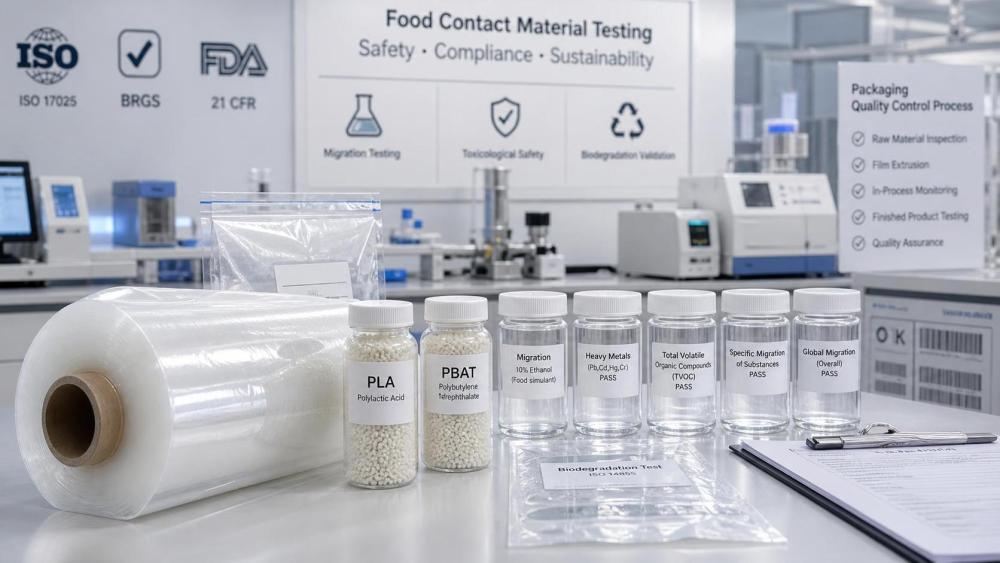
What the FDA draft guidance requires
The draft document is titled Bio-based Food Contact Materials: Degradation Pathway Verification Guidance. According to the information provided, it requires all suppliers of biodegradable PLA/PBAT resins for food-contact use to submit complete environmental degradation pathway data verified under OECD 301 or OECD 310 standards. The submission must also include toxicity assessment reports covering intermediate metabolic products. The requirement will apply mandatorily to newly registered products starting on November 1, 2026.
Where the immediate pressure is likely to appear
Resin suppliers face a higher documentation threshold
From an industry perspective, suppliers of PLA and PBAT food-contact resins are the first group affected because the draft guidance is aimed directly at the evidence package behind these materials. The main business impact is likely to center on registration preparation, technical dossier completeness, and the ability to present verified degradation data in a form acceptable for compliance review.
Importers into North America may need tighter screening
Analysis shows that North American importers are exposed through compliance access rather than only through product performance. If a new registered product does not carry the required verification and toxicity documentation, import-side qualification and sourcing decisions may become more cautious. What deserves closer attention is whether current and planned suppliers can support registration-related paperwork within commercial timelines.
Packaging converters and downstream buyers may feel the effect through procurement
Processors, converters, and end-use buyers may not be the primary regulatory filing party, but they can still be affected through raw material approval, supplier selection, and delivery planning. Observably, the practical issue for these businesses is whether approved materials remain available for new product programs and whether documentation gaps create delays in customer-facing commitments.
What companies should watch now
Track how the draft language develops
Because the document is described as draft guidance, companies should distinguish between the current regulatory signal and any later finalized wording. The immediate focus should be on whether subsequent official communication changes scope, evidentiary expectations, or interpretation around degradation pathway verification and toxicity reporting.
Check which new registrations are exposed first
The mandatory date provided is November 1, 2026, and it applies to new registrations. That makes pipeline products, upcoming launches, and new sourcing programs the most sensitive areas in the short term. Businesses with active product introductions tied to PLA/PBAT food-contact materials should pay close attention to timing, filing readiness, and material qualification status.
Review supplier files beyond headline biodegradability claims
What deserves closer attention is not only whether a supplier markets a resin as biodegradable, but whether it can provide complete degradation pathway data verified to OECD 301/310 and a toxicity assessment for intermediate metabolic products. For procurement and compliance teams, this turns technical backup documents into a practical gate for supplier approval.
Prepare for customer and partner communication
Importers, converters, and procurement teams may need clearer internal and external communication on documentation status, registration timing, and potential supply implications for new projects. In practice, this is less about broad strategy language and more about contract timing, supporting records, and contingency planning where supplier evidence is still incomplete.
Why this reads as more than a routine wording update
Analysis shows that this development is notable because it shifts attention from general bio-based or biodegradable positioning toward verifiable degradation pathways and intermediate-product toxicity review for food-contact materials. It is more appropriate to understand this as a concrete compliance signal rather than a finalized industry outcome, since the guidance is still in draft form but already carries a defined mandatory date for new registrations. That combination is why the market is likely to keep watching both the formal rule path and practical implementation expectations.
How the market may interpret the signal
At this stage, the update is best read as a near-term compliance change for affected new registrations and a longer-term signal that documentation quality will matter more in food-contact bio-based materials. From an industry perspective, the key issue is not simply whether PLA/PBAT remains in use, but whether suppliers and buyers can support regulatory access with the required verification package. The effect is therefore specific, operational, and worth continued observation rather than broad or speculative.
Basis of this article and what still needs checking
This article is based on the user-provided news title, event date, and event summary. For this type of development, commonly relevant source categories may include official agency notices, company disclosures, industry association updates, authoritative media reports, and standards-related documents. A specific official source link was not provided in the input, so the exact publication text and any subsequent clarification still need ongoing verification. Continued attention should focus on later FDA wording, implementation details for new registrations, and any further compliance interpretation affecting North American import access and procurement decisions.
Have questions about this sector analysis, or seeking best practices specific to your niche? Drop us a line below and let the senior consultants at APIM assist you.
We respect your privacy. Your information is strictly confidential.
Related News
- 00
0000-00
Do polyolefin hot melt adhesives bond well to polyethylene? - 00
0000-00
Korean Study Finds PLA Barely Degrades in Landfill After 320 Days - 00
0000-00
How to assess batch consistency from a thermal potting compounds supplier - 00
0000-00
How much weight can carbon fiber reinforced plastics save in cars? - 00
0000-00
Switching from PS to ABS Sheet Extrusion: Equipment Checks