




Biomaterials Price Trends in 2026: What Is Driving Costs?
Biomaterials price trends in 2026 are moving from a sustainability topic to a core cost issue. What matters now is not only whether bio-based materials fit environmental goals, but how their pricing affects margin, sourcing flexibility, and product planning across manufacturing.
The pressure is coming from several directions at once. Feedstock markets remain volatile, regulations are changing cost structures, and capacity expansion is uneven by region. As a result, biomaterials price behavior is becoming more complex than a simple comparison with conventional polymers.
For companies working with packaging, automotive parts, consumer goods, electronics, medical components, or industrial products, this shift deserves close attention. A stable view of biomaterials price trends can shape better decisions on procurement timing, formulation strategy, and long-term material selection.
Why biomaterials pricing now matters more broadly
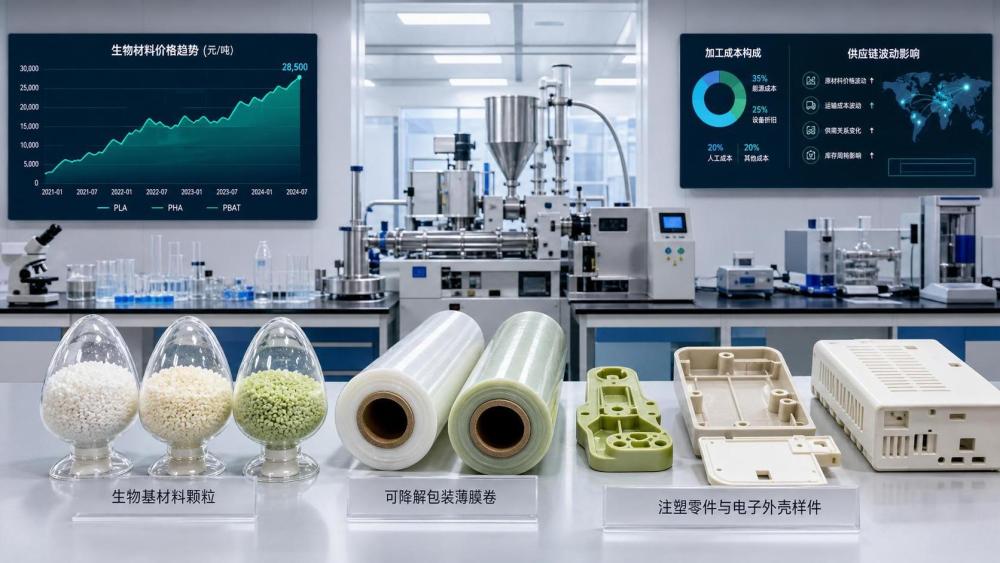
Biomaterials are no longer limited to niche applications. PLA, PBAT, starch blends, cellulose-based materials, bio-based polyamides, and bio-based polyesters are entering mainstream industrial evaluation.
That broader use changes the pricing conversation. When trial volumes become commercial volumes, even small shifts in biomaterials price can affect annual budgets, product cost targets, and supplier qualification plans.
This is especially relevant where material choice influences more than raw input cost. In films, compounds, molded parts, and adhesive systems, biomaterials price also connects to processing stability, scrap rate, throughput, and compliance cost.
That is why market intelligence platforms such as APIM matter in this space. Price signals need context from polymer performance, compounding behavior, extrusion conditions, application demands, and supply chain development.
What is really behind biomaterials price trends in 2026
The main drivers are not identical across every biomaterial. Still, several forces are shaping the market at the same time.
Feedstock availability and agricultural linkage
Many biomaterials rely on agricultural or bio-based feedstocks such as corn, sugarcane, plant oils, and fermentation inputs. Weather patterns, land use competition, and crop price swings can move costs quickly.
Unlike fossil-based polymers, these materials can face a different kind of volatility. Harvest conditions, energy prices, fertilizer costs, and logistics constraints all influence the final biomaterials price.
Processing and conversion economics
A resin may look acceptable on a price-per-kilogram basis, yet become expensive during conversion. Some biomaterials have narrower processing windows, moisture sensitivity, or lower thermal stability.
That can increase drying needs, cycle adjustments, line speed losses, or reject rates. In practice, biomaterials price should be read together with process cost, not in isolation.
Regulation and certification burden
Compostability claims, bio-based content verification, food-contact compliance, and regional labeling rules are adding cost layers. Certification itself may not dominate the bill, but it changes market access.
Where rules tighten, lower-grade supply can lose value while certified material gains pricing power. That reshapes biomaterials price spreads across suppliers and regions.
Capacity expansion and regional imbalance
New biomaterial plants are being announced, but startup timing and quality consistency remain uneven. Some regions are adding fermentation and polymerization capacity faster than downstream compounding and conversion support.
This creates a market where nominal capacity growth does not always mean stable delivered cost. Biomaterials price may soften in one region while remaining elevated elsewhere due to freight, qualification barriers, or limited local supply.
Why a simple price comparison often fails
Comparing biomaterials only against standard PP, PE, PET, or engineering plastics can be misleading. The business case depends on the full performance and processing picture.
A biodegradable film grade may cost more upfront, yet reduce regulatory exposure in certain packaging programs. A bio-based engineering polymer may support lightweighting or brand requirements that conventional grades cannot address as easily.
In other cases, the opposite is true. A lower quoted biomaterials price may hide poor batch consistency, unstable supply, or difficult extrusion behavior. That risk becomes expensive once commercial output starts.
This is where technical interpretation matters. APIM’s coverage of compounds, films, adhesives, extrusion systems, and recycled or bio-based materials helps frame price as part of a wider operating decision.
How cost pressure shows up in real industrial use
Biomaterials price trends affect sectors differently because each application values a different mix of barrier performance, strength, appearance, heat resistance, and process stability.
From an industrial materials perspective, the right question is not whether biomaterials price is high or low. The better question is whether the delivered value matches the process and application requirement.
Signals worth tracking through 2026
Several indicators can help interpret where biomaterials price trends are heading instead of reacting after costs move.
- Changes in agricultural commodity pricing and bio-feedstock availability.
- New plant startups for PLA, PBAT, and bio-based engineering resins.
- Regional policy changes on compostability, recycled content, and packaging responsibility.
- Freight and energy trends affecting delivered resin cost.
- Supplier moves toward modified grades with better processing performance.
- Qualification activity in automotive, medical, electronics, and food packaging chains.
More importantly, these signals should be read together. A falling resin quote does not automatically improve economics if certification costs rise or process yield worsens.
How to evaluate biomaterials price in business terms
A more useful evaluation model combines procurement, technical, and market factors. That approach is increasingly necessary where materials decisions affect both cost and compliance.
Look beyond the quoted resin number
Include drying, throughput, rejects, rework, packaging format, storage conditions, and test requirements. This often changes the real ranking between suppliers.
Separate short-term volatility from structural cost
Some biomaterials price swings are temporary, linked to logistics or seasonal feedstock issues. Others reflect a lasting gap in capacity, technology maturity, or certification complexity.
Match price review to application criticality
For non-critical packaging, substitution options may be wider. For medical devices, electronics insulation, or engineered components, switching is slower and hidden cost is higher.
Use material intelligence, not only supplier quotes
Price decisions improve when market data is linked with resin behavior, compounding quality, extrusion performance, and end-use requirements. That is where structured industry coverage becomes valuable.
What the next step should look like
In 2026, biomaterials price should be treated as a strategic variable, not a side note within sustainability reporting. The market is broadening, but pricing remains uneven across chemistries, regions, and applications.
The most practical response is to build a comparison framework that combines feedstock exposure, processing cost, qualification burden, supply security, and application value. That makes biomaterials price easier to interpret in commercial terms.
From there, the next move is clear: review where bio-based or biodegradable materials sit in current product portfolios, identify the highest-cost uncertainty points, and track market signals with the same discipline used for conventional polymers and engineered materials.
Have questions about this sector analysis, or seeking best practices specific to your niche? Drop us a line below and let the senior consultants at APIM assist you.
We respect your privacy. Your information is strictly confidential.
Related News
- 00
0000-00
How does washing affect contamination in post-consumer recycled PP resins? - 00
0000-00
How does feedstock affect depolymerization equipment selection? - 00
0000-00
US Sets 213.44% Preliminary Antidumping Deposit on Chinese PTMEG - 00
0000-00
When should epoxy be used as a thermal interface material for semiconductors? - 00
0000-00
US Midterm Results Unlikely to Quickly Shift Recycled Plastics Market or Legislation