




Bio-Based Polymer Materials Cost: Hidden Factors Behind Supplier Quotes
Why does bio-based polymer materials cost look simple on paper but change in practice?
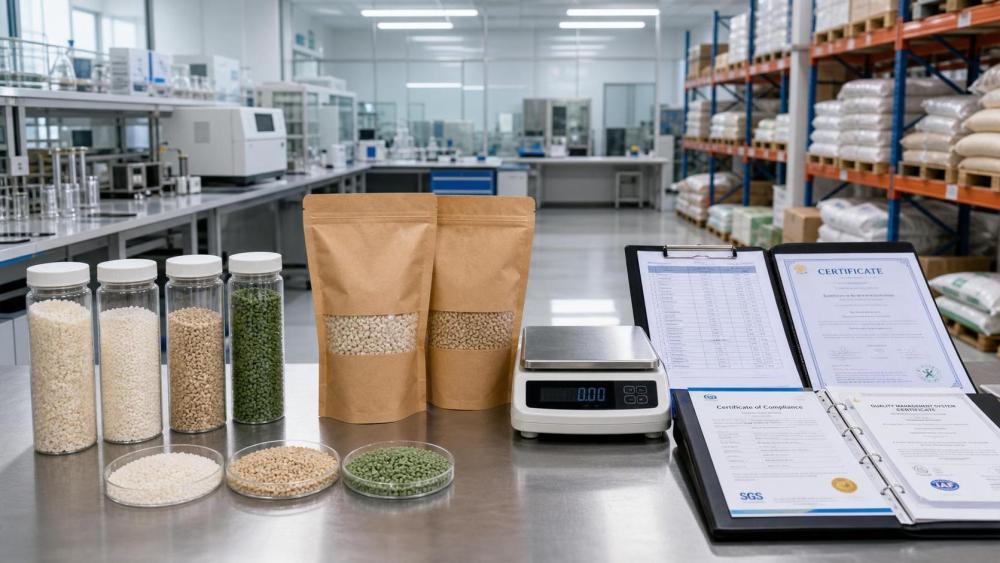
A supplier quote often shows one clean number per kilogram. The real bio-based polymer materials cost is rarely that tidy.
In actual sourcing, resin price is only the visible layer. Feedstock route, certification scope, and compounding details can shift total cost quickly.
That matters across packaging, electronics, automotive, consumer goods, films, and industrial parts, where material choices affect process stability and compliance.
A PLA grade for thermoforming, a bio-based PA for connectors, or a specialty compound for extrusion may carry very different cost logic.
The better question is not only, “What is the unit price?” It is, “What exactly is included in this quote, and what is missing?”
This is where structured market reading becomes useful. Platforms such as APIM help connect material data, processing behavior, and supply chain signals.
That broader view makes bio-based polymer materials cost easier to compare, especially when two offers look similar but behave differently in production.
Which hidden factors usually sit behind a supplier quote?
The biggest mistake is assuming all price differences come from margin. More often, they come from technical and supply chain variables.
Several cost drivers appear before the material even reaches the plant:
- Feedstock origin, such as sugarcane, corn, castor oil, or waste-derived biological inputs.
- Bio-content verification, including ASTM, ISO, ISCC, or other chain-of-custody requirements.
- Formulation complexity, especially when fillers, impact modifiers, UV packages, or flame retardants are added.
- Compounding quality, dispersion consistency, pellet shape, moisture control, and lot-to-lot stability.
- Regional freight, warehousing, import duties, and lead-time buffering.
Processing also changes the equation. A lower quoted resin price may cause more scrap, drying time, cycle delays, or mold fouling.
That means the cheapest quote can produce the highest effective bio-based polymer materials cost once conversion losses are included.
For extrusion, film, and compounding applications, even small differences in melt strength or thermal stability can alter output and waste rates.
A quick comparison helps expose those differences
Before approving a quote, it helps to review hidden cost items side by side rather than focusing on price alone.
Is a higher quote always overpriced, or can it be cheaper overall?
Not necessarily. A higher quoted price can still reduce the total bio-based polymer materials cost in real production.
One common example is conversion efficiency. A grade with tighter moisture control may shorten drying and reduce hydrolysis risk.
Another example is dimensional stability. If a reinforced bio-based compound reduces warpage, downstream rejection can fall enough to offset price.
This is especially relevant in precision parts, electronics housings, specialty films, and multilayer packaging structures.
It also applies to industrial adhesives and substrates. A bio-based component may support sustainability targets, but only if process reliability stays acceptable.
In practice, the better comparison is total landed and converted cost, not just the invoice rate for resin pellets.
Useful checks include yield, line speed, cycle time, energy demand, scrap level, and whether the grade needs extra additives.
What should be questioned when two bio-based material offers look similar?
When two quotes appear close, the next step is to test what “similar” actually means.
A supplier may describe both grades as bio-based, but the sourcing model may differ. One may use mass balance certification. Another may use direct bio-feedstock content.
Those models can affect internal reporting, external claims, and customer acceptance, which then affects the practical bio-based polymer materials cost.
Mechanical performance matters too. Similar tensile values on a data sheet do not guarantee equal processability or long-term aging behavior.
For this reason, a short technical checklist is often more valuable than another round of price negotiation.
- Is the quoted grade already commercial, or still in limited regional supply?
- Does the quote include standard compliance documents and batch traceability?
- Will the grade run on current tools, screws, dryers, and temperature settings?
- How stable is the color, odor, and surface finish across production lots?
- What is the realistic lead time during seasonal feedstock or freight disruptions?
This is where market intelligence becomes practical. APIM-style material coverage is useful because it links resin data with process and application context.
Where do sourcing mistakes usually happen?
Most sourcing mistakes happen when sustainability language is treated as a substitute for technical qualification.
A material can meet a renewable content target and still create trouble in extrusion, molding, lamination, or bonding.
Another frequent error is comparing bio-based polymer materials cost across grades that serve different design demands.
For example, an unfilled bio-based resin should not be judged directly against a glass-fiber reinforced engineering compound without normalization.
The same applies in films and adhesives. Barrier performance, sealing behavior, and surface treatment may change the true cost picture.
Need-to-know risks usually include the following:
- Assuming lab data equals line performance.
- Ignoring drying, storage, and shelf-life conditions.
- Underestimating certification renewal or documentation effort.
- Treating pilot-scale supply as long-term commercial capacity.
- Missing the cost of qualification, trial downtime, and reformulation.
The more technical the application, the more dangerous it is to reduce the decision to a single quoted number.
How can bio-based polymer materials cost be evaluated more accurately before commitment?
A practical evaluation starts with a narrower scope. Define the exact use case before comparing grades.
That means confirming whether the material is for injection molding, sheet extrusion, blown film, compounding, bonding, or another route.
Then build a comparison around total cost drivers, not only resin price. A simple decision table can keep the review disciplined.
A final note: monitor substitution risk. In advanced polymers, a low-price entry can become expensive if later grade changes interrupt approvals.
A more reliable approach is to combine supplier quotes with structured data on properties, processing, and regional supply conditions.
That is why bio-based polymer materials cost should be reviewed as a technical-commercial package, not a standalone price tag.
What is the smartest next step before selecting a supplier?
Start by documenting the exact application, processing route, annual volume, and claim requirements tied to the material.
Then compare offers using the same cost frame: resin, certification, trial effort, conversion impact, logistics, and continuity risk.
This usually reveals that bio-based polymer materials cost is less about one quote and more about what the quote allows in production.
When the market includes engineering plastics, specialty films, compounds, and industrial adhesives, cross-checking technical fit becomes essential.
Use available material intelligence to narrow the field, challenge unclear assumptions, and prepare sharper supplier discussions.
A disciplined review now usually saves more than another round of price pressure later.
Have questions about this sector analysis, or seeking best practices specific to your niche? Drop us a line below and let the senior consultants at APIM assist you.
We respect your privacy. Your information is strictly confidential.
Related News
- 00
0000-00
How does washing affect contamination in post-consumer recycled PP resins? - 00
0000-00
How does feedstock affect depolymerization equipment selection? - 00
0000-00
US Sets 213.44% Preliminary Antidumping Deposit on Chinese PTMEG - 00
0000-00
When should epoxy be used as a thermal interface material for semiconductors? - 00
0000-00
US Midterm Results Unlikely to Quickly Shift Recycled Plastics Market or Legislation