




Yangtze Delta Mandates PCR Export Trace Codes
On July 8, 2026, China Customs began full rollout of an export traceability code system for PCR Plastic Washing & Pelleting in the Yangtze River Delta, making coding mandatory for export-grade PE, PP, and PET recycled pellets. The change matters not only as a customs filing requirement, but as a practical compliance condition that can affect exporters, buyers, processors, testing workflows, shipment release, and how recycled material traceability is presented in cross-border transactions.
What the new customs requirement confirms
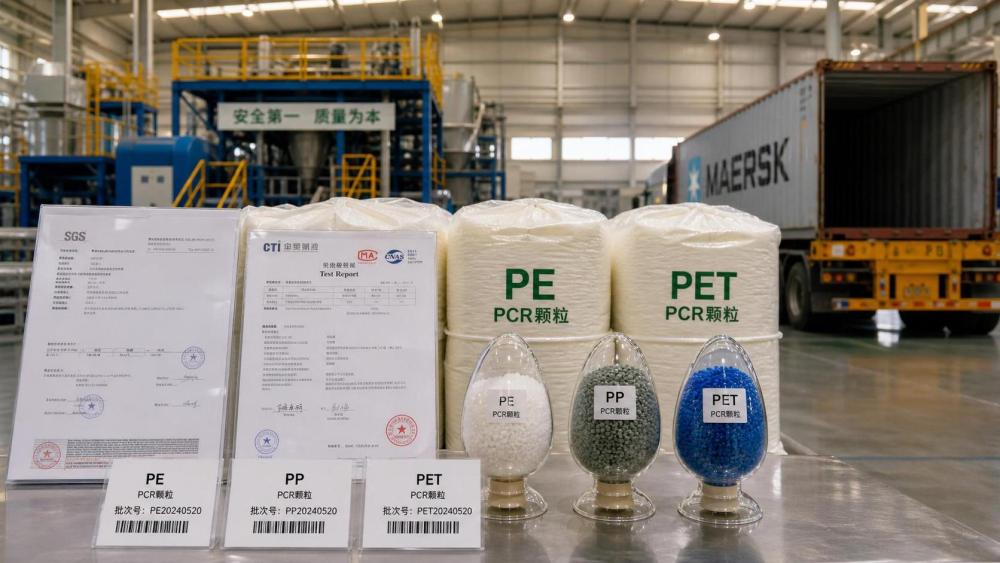
According to the provided event summary, the General Administration of Customs of China announced that from July 8, 2026, the Yangtze River Delta will fully activate the PCR Plastic Washing & Pelleting export traceability code system. The system covers all export-grade PE, PP, and PET recycled pellets.
Enterprises are required to submit washing process parameters, impurity test reports, and batch traceability codes through the Green Clearance Platform. Goods without the required code will not be released. The stated purpose is to strengthen international buyers' ability to verify the traceability and compliance credibility of Chinese PCR materials.
Where the operational pressure is likely to appear
For exporters, shipment release becomes directly tied to coding readiness
From an industry perspective, exporters are the most immediately affected group because the rule is linked to customs release. The practical impact is likely to appear in pre-shipment document preparation, batch management, and coordination between production records and export filings. What deserves closer attention is whether internal batch control can support timely submission of process parameters, impurity reports, and traceability code information before cargo reaches the release stage.
For buyers and procurement teams, traceability becomes part of supplier screening
Analysis shows that overseas buyers and procurement teams may increasingly treat the traceability code process as part of supplier due diligence for PCR materials. The direct issue is not only material availability, but whether suppliers can provide a traceable and customs-cleared shipment package that aligns with compliance expectations. Procurement discussions may therefore shift toward documentation readiness, testing support, and consistency between physical batches and submitted records.
For processors and recyclers, production records move closer to trade compliance
Observably, the requirement connects manufacturing-side data with export compliance more tightly than before. For recyclers and pellet producers handling PE, PP, and PET export grades, washing process parameters and impurity testing are no longer just technical records in the plant context; they become part of the trade-facing evidence package required for release. This may affect handover points between production, quality control, and export documentation teams.
For testing and supply-chain service providers, document integrity gains weight
What deserves closer attention is the role of service providers that support inspection, documentation, and export operations. Where shipments depend on uploaded impurity reports and batch traceability records, the quality, timing, and consistency of those documents may become more important in logistics scheduling and customs preparation. The event summary does not provide detailed execution rules, so this should be understood as an operational observation rather than a confirmed outcome.
What companies should review now
Check whether batch files are ready for platform submission
Companies dealing in export-grade PE, PP, and PET recycled pellets should closely review whether batch-level records can support submission through the Green Clearance Platform. Based on the confirmed facts, the immediate concern is whether washing process parameters, impurity test reports, and traceability code data can be organized in a form usable for export release.
Revisit document flow between production, quality, and export teams
Analysis shows that the new requirement is likely to expose gaps where production data, testing results, and customs filing materials are kept in separate workflows. Enterprises should pay attention to internal document handoff, version control, and timing, especially where export schedules depend on documents generated by more than one function.
Watch for how customers and counterparties update compliance requests
It is more appropriate to understand this change as a signal that customer-side review of PCR material traceability may become more specific. Companies should therefore monitor whether buyers, trading partners, or procurement teams begin asking for traceability-related support materials, batch references, or evidence aligned with customs-coded shipments. The input does not provide specific downstream market responses, so this remains a point for continued observation.
Plan around release risk rather than assuming normal shipment timing
Because the provided summary states that uncoded goods will not be released, shipment planning and delivery commitments deserve closer attention. Enterprises should review whether pending orders, production scheduling, and export preparation can absorb any adjustment needed to complete coding-related submissions. Without more detailed official execution guidance in the input, companies should treat this as a near-term compliance checkpoint rather than assume a settled operating pattern.
How this change is best understood at this stage
Observably, this development is more than a general policy direction and less than a fully transparent execution framework in the information currently provided. It already signals a landed compliance requirement because the event summary specifies a start date, covered products, submission items, and the consequence of non-release for uncoded goods. At the same time, analysis shows that the market still needs to watch how implementation language, documentary expectations, and business counterpart reactions evolve in practice.
From an industry perspective, the strongest immediate meaning of the update is that export traceability for PCR pellets is being tied more directly to customs handling and buyer-facing credibility. That makes the rule relevant not only to customs staff, but also to procurement, quality, operations, and sales teams involved in export transactions.
Why the market should keep following this development
The event is best read as a concrete compliance signal with immediate trade relevance in the Yangtze River Delta for export-grade PE, PP, and PET recycled pellets. It does not by itself confirm every operational consequence, but it clearly indicates that traceability records, test documentation, and platform submission are moving closer to the center of export execution. A measured reading is that companies should treat this as an active rule change with practical shipment implications, while continuing to monitor how implementation details and market responses develop.
Basis of this article and what still needs verification
This article is generated from the user-provided news title, event date, and event summary. For events of this kind, relevant source types typically include official announcements, releases from regulatory authorities, customs or trade administration information, industry association updates, standard-setting documents, and reporting by authoritative media.
A specific official source link was not provided in the input, so the exact official publication path still requires follow-up verification. Observably, the areas that still warrant continued attention include any further implementation details, compliance interpretation, documentation expectations, possible changes in procurement or tender language, industry feedback, and how enterprises carry the requirement into routine export operations.
Have questions about this sector analysis, or seeking best practices specific to your niche? Drop us a line below and let the senior consultants at APIM assist you.
We respect your privacy. Your information is strictly confidential.
Related News
- 00
0000-00
How does washing affect contamination in post-consumer recycled PP resins? - 00
0000-00
How does feedstock affect depolymerization equipment selection? - 00
0000-00
US Sets 213.44% Preliminary Antidumping Deposit on Chinese PTMEG - 00
0000-00
When should epoxy be used as a thermal interface material for semiconductors? - 00
0000-00
US Midterm Results Unlikely to Quickly Shift Recycled Plastics Market or Legislation
Tag