




When Underwater Pelletizing Systems Reduce Dust, Waste, and Line Downtime
When Underwater Pelletizing Systems Reduce Dust, Waste, and Line Downtime
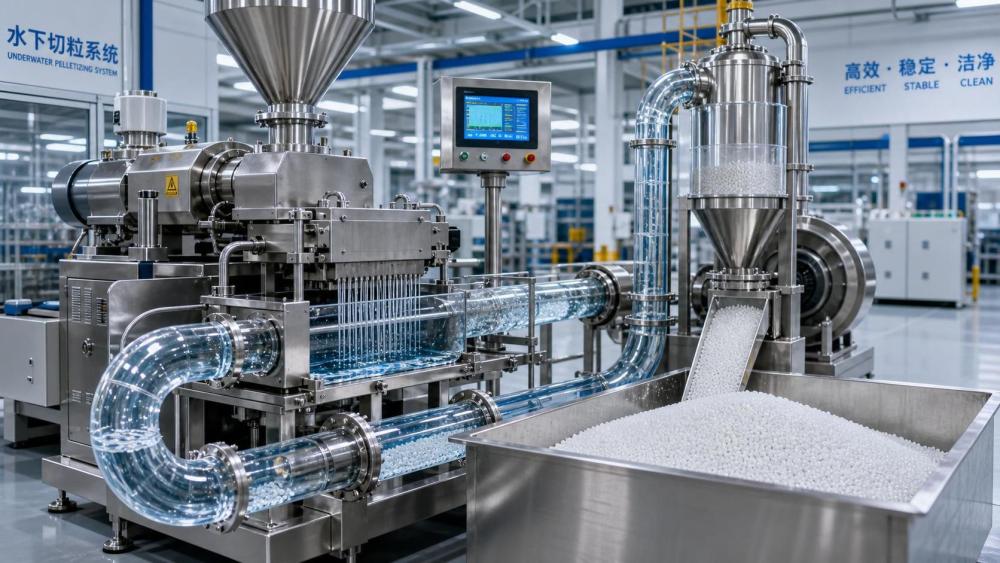
For many polymer plants, pelletizing is where efficiency is either protected or quietly lost.
That is why underwater pelletizing systems now matter well beyond simple pellet cutting.
When output rises, dust control, yield, and uptime become linked.
A weak pelletizing section can trigger fines, unstable pellet shape, screen loading, and cleaning delays.
In contrast, well-matched underwater pelletizing systems support stable production with less operator intervention.
This matters in engineering plastics, recycled polymers, filled compounds, and specialty materials.
It also matters when production teams are under pressure to improve output without expanding floor space.
From a project perspective, the value is practical.
Underwater pelletizing systems can reduce airborne dust, lower material loss, and keep the line running longer between stops.
That creates a cleaner process and a more predictable operation.
Why Dust Becomes a Hidden Cost
Dust is often treated as a housekeeping issue, but it usually starts as a process issue.
In dry pellet cutting or unstable cooling conditions, pellets can chip, crack, or generate fines.
Those fines do more than collect on floors.
They can contaminate packaging, affect bulk density, disrupt feeding, and increase downstream cleaning time.
For compounds used in automotive, electronics, or precision extrusion, that becomes a quality risk.
Underwater pelletizing systems address this at the moment pellets are formed.
Pellets are cut at the die face and immediately carried by water.
That quick cooling and transport reduce pellet-to-pellet abrasion during early handling.
The result is usually lower dust generation and better pellet integrity.
In actual operations, this also improves workplace cleanliness and simplifies dust collection demands.
Where the dust reduction is most visible
- Glass-filled or mineral-filled compounds that chip easily
- Recycled polymers with variable melt behavior
- Soft or tacky materials that need controlled cooling
- High-throughput lines where conveying friction increases fines
How Underwater Pelletizing Systems Reduce Material Waste
Waste is not limited to startup scrap.
It also includes off-size pellets, dust loss, unstable cuts, and product rejected for poor appearance.
That waste becomes expensive fast when processing specialty resins or reinforced formulations.
Underwater pelletizing systems help reduce these losses through tighter process control.
A stable die pressure, proper melt temperature, and accurate cutter speed support more uniform pellet geometry.
More uniform pellets usually mean more stable feeding in downstream molding or extrusion.
That reduces customer complaints and internal rework.
Another advantage is faster transition between startup and saleable production.
When the pelletizing section reaches stable conditions quickly, operators throw away less material.
That is especially important where short campaigns or frequent product changes are common.
Typical waste points to review
- Pellet size variation causing downstream feeding issues
- Fines removed during screening and discarded
- Product lost during unstable startup or shutdown
- Rejected lots from visual inconsistency or contamination
The Link Between Pelletizing and Line Downtime
Downtime often appears elsewhere before teams trace it back to pelletizing.
Feed interruptions, blocked dryers, cutter wear, poor water management, and screen cleaning can all slow production.
A poorly selected pelletizing setup may run, but not reliably enough for demanding schedules.
Underwater pelletizing systems are often chosen because they support continuous, high-output operation.
When integrated correctly, they reduce manual handling and keep pellet transport more controlled.
That lowers the chance of process interruptions linked to pellet damage or inconsistent discharge.
More importantly, modern underwater pelletizing systems support repeatable operation across different compounds.
This helps production planners run tighter schedules with fewer unplanned stops.
In a plant with expensive labor and high asset utilization targets, that difference is significant.
Common downtime triggers that can be reduced
- Frequent cutter blade adjustments
- Water loop contamination and separator inefficiency
- Pellet clumping due to poor cooling balance
- Unstable die face conditions during product changes
What to Evaluate Before Selecting Underwater Pelletizing Systems
Not every line benefits equally from the same configuration.
The best underwater pelletizing systems are selected around material behavior and operational targets.
That means evaluating more than nameplate output.
In recent projects, the stronger decisions usually come from matching four areas early.
1. Material and formulation profile
Check melt viscosity, filler content, additive package, stickiness, and heat sensitivity.
A TPU compound behaves differently from a glass-filled PA or recycled PP blend.
2. Required pellet quality
Define acceptable limits for size distribution, dust, moisture, appearance, and bulk density.
This prevents vague specifications during equipment comparison.
3. Utility and maintenance conditions
Review water quality, cooling capacity, filtration, spare parts access, and maintenance skill level.
A strong system can still underperform if the support conditions are weak.
4. Integration with the full line
Assess the extruder, screen changer, melt pump, dryer, classifier, and conveying system together.
Underwater pelletizing systems work best when they are not treated as isolated equipment.
A Practical Comparison for Project Decisions
Implementation Priorities That Usually Pay Back Faster
The biggest gains rarely come from hardware alone.
They come from pairing underwater pelletizing systems with clear operating standards.
A few priorities tend to deliver results sooner.
- Set baseline data for fines rate, startup scrap, and downtime before installation
- Define pellet quality targets by application, not by general appearance alone
- Train operators on die face condition, water balance, and cutter response
- Align spare parts planning with actual wear items and campaign length
- Review upstream melt stability, because pelletizing cannot fix unstable compounding
This also changes how return on investment is discussed.
The case for underwater pelletizing systems is often strongest when labor, quality, and uptime are measured together.
A More Reliable Path to Cleaner, Steadier Production
In polymer processing, small pellet problems can grow into large operational costs.
That is why underwater pelletizing systems are increasingly evaluated as a plant efficiency solution.
They help reduce dust, limit material waste, and support more stable line performance.
Just as important, they create better control when production demands become more complex.
For operations handling engineering plastics, modified compounds, or recycled materials, that control has direct business value.
The practical next step is simple.
Review where fines, scrap, and stoppages are happening now, then evaluate whether underwater pelletizing systems can remove those exact constraints.
That approach leads to better equipment decisions and a stronger production result.
Have questions about this sector analysis, or seeking best practices specific to your niche? Drop us a line below and let the senior consultants at APIM assist you.
We respect your privacy. Your information is strictly confidential.
Related News
- 00
0000-00
Do polyolefin hot melt adhesives bond well to polyethylene? - 00
0000-00
Korean Study Finds PLA Barely Degrades in Landfill After 320 Days - 00
0000-00
How to assess batch consistency from a thermal potting compounds supplier - 00
0000-00
How much weight can carbon fiber reinforced plastics save in cars? - 00
0000-00
Switching from PS to ABS Sheet Extrusion: Equipment Checks