




For procurement teams searching for “pelletizing systems Germany,” comparing supplier quotes means looking beyond the purchase price to feedstock requirements and saleable pellet output.
The cost of a German recycling pelletizing line depends on throughput, feedstock contamination, extrusion and filtration requirements, and the choice between strand and underwater pelletizing.
Automation, energy consumption, wear parts, installation, and service support also shape total ownership costs. These expenses can change which quotation offers the stronger commercial outcome.
The most useful comparison is installed cost and operating cost per tonne of acceptable pellets, measured against the same feedstock specification and quality requirements.
Understanding these drivers helps buyers distinguish essential process capabilities from optional upgrades and select equipment without paying for unnecessary capacity, complexity, or unsupported performance claims.
Why can two German pelletizing system quotes differ so much?
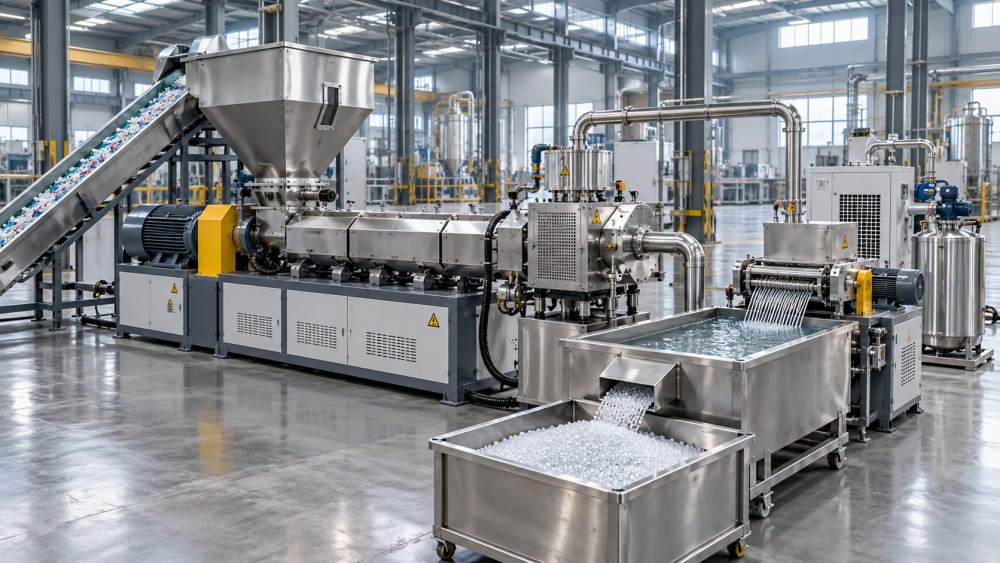
The largest differences often begin with scope. One supplier may quote a pelletizer alone, while another includes extrusion, filtration, cooling, drying, controls, and commissioning.
Before comparing prices, establish whether the offer covers a pelletizing unit, an extrusion and pelletizing line, or an integrated recycling installation with upstream preparation.
A low equipment price can become expensive when the buyer separately purchases conveyors, electrical distribution, cooling equipment, platforms, laboratory instruments, or installation services later.
German supplier identity also needs clarification. Manufacturing location, component origin, engineering responsibility, and service coverage are separate questions that should be answered in writing.
Engineering, documentation, component selection, and support commitments can explain part of a premium. Country of origin alone does not establish suitability for your material.
Request an itemized scope, utility schedule, exclusions list, and responsibility matrix. These documents reveal whether competing prices actually represent equivalent deliverables and contractual obligations.
What throughput are you actually buying?
Nominal throughput is useful only when its test conditions are clear. Clean, dry production scrap can behave very differently from variable postconsumer film waste.
Ask suppliers to state guaranteed output for your polymer, bulk density, moisture level, contamination range, filtration requirement, and agreed pellet specification under defined conditions.
Lightweight film may require compaction or specialized feeding to keep an extruder consistently loaded. Dense regrind may create a different feeding and melting challenge.
Increasing throughput can require larger drives, filtration area, cooling capacity, and downstream handling. The resulting investment increase may extend well beyond the extruder itself.
Buying excessive capacity can reduce capital productivity, particularly when collection volumes fluctuate. Confirm minimum stable operating rates and performance during partial loads before selecting size.
Compare annual saleable output using realistic operating hours, availability, and yield. Avoid multiplying nameplate capacity by every calendar hour when evaluating the business case.
How much does your feedstock increase processing cost?
Feedstock variability often drives more expenditure than buyers initially expect. Moisture, printing inks, paper, metal particles, and mixed polymers create different processing and quality problems.
Clean industrial scrap may need relatively straightforward melting and filtration. Printed packaging waste can require more intensive preparation, degassing, filtration, and control of process conditions.
Filtration removes certain solid contaminants; it does not automatically separate incompatible polymers or eliminate dissolved substances. Better equipment cannot compensate for every feedstock limitation.
Finer filtration can increase pressure and screen consumption, depending on contamination loading. Assess filter area, cleaning cycles, melt losses, and pressure stability together during trials.
Vacuum degassing can reduce moisture and some volatile substances, but odor performance depends on contaminants and process conditions. Any deodorization claim needs a defined test.
For moisture sensitive polymers such as PET, evaluate drying strategy and viscosity retention. Include the energy and maintenance costs of the proposed conditioning system.
Specify incoming feedstock limits in the purchase contract. Otherwise, disagreements about poor output can become disputes over whether the supplied waste met unstated assumptions.
Should you pay more for underwater pelletizing?
Strand pelletizing and underwater pelletizing have different equipment requirements and operating characteristics. Neither technology provides the lowest total cost for every recycled polymer stream.
Conventional strand systems commonly cool extruded strands before cutting them. Their economics depend on strand stability, operator intervention, available space, and the selected cooling arrangement.
Frequent strand breaks can reduce output or increase labor demand. Trials should establish whether the expected material variability causes problems that offset purchase savings.
Underwater systems cut pellets at the die face within a water chamber. They require coordinated water treatment, pellet drying, temperature control, and startup procedures.
They can suit continuous production and particular pellet specifications, but die plates, knives, drying equipment, and water circuits add investment and maintenance requirements over time.
Water ring and other hot die face configurations may also be relevant. Ask suppliers to explain technology selection against your resin portfolio and output requirements.
Compare pellet size distribution, fines, residual moisture, changeover time, and startup losses. A higher purchase price needs measurable operating benefits under your production conditions.
Which upgrades protect pellet quality and operating margin?
Automation earns its cost when it stabilizes production, reduces intervention, or prevents avoidable losses. Its value should connect to specific operating problems and measurable outcomes.
For example, coordinated feeding and pressure control may improve consistency, while process alarms and historical data can help operators diagnose recurring interruptions more efficiently.
However, automation cannot remove every need for skilled operators. Budget for training, troubleshooting access, software support, and clear ownership of recipes and production records.
Wear resistant screws, barrels, and cutting components may be justified for abrasive or filled feedstocks. Request material specifications and replacement pricing before approving upgrades.
Evaluate a melt pump against pressure stability requirements, filtration behavior, and downstream needs. Its additional energy use and maintenance belong in the same assessment.
Separate essential equipment from options by identifying the failure or quality problem each option addresses. Then test whether its expected benefit exceeds its annualized cost.
How should buyers calculate total cost per saleable tonne?
A useful ownership model includes annualized installed capital, energy, labor, consumables, maintenance, and material losses, divided by the tonnes of pellets meeting the agreed specification.
Keep the accounting boundary consistent. If feedstock purchasing, waste disposal, financing, or building costs are included, apply the same treatment to every competing offer.
Request energy figures for the complete quoted system at agreed conditions. Extruder drive consumption alone excludes potentially significant drying, cooling, vacuum, and auxiliary loads.
Use sensitivity analysis for electricity prices, operating hours, yield, and maintenance. These variables often affect investment returns more strongly than a modest purchase discount.
Consider this illustrative comparison: one installation costs €300,000 more but produces 5,000 saleable tonnes annually with a verified operating saving of €25 per tonne.
That difference represents €125,000 in annual savings and a simple payback of 2.4 years, before financing, taxes, and changes in production volume or pricing.
These figures demonstrate the calculation, not market pricing. Replace them with trial results and supplier commitments, and avoid counting the same benefit twice in forecasts.
If the saving depends on additional uptime, confirm that feedstock supply and customer demand can absorb the extra output. Unused capacity does not generate revenue.
What installation and service costs belong in the budget?
The equipment quotation is only one part of project expenditure. Freight, insurance, duties, unloading, foundations, utilities, integration, and commissioning can materially change the required budget.
Confirm power availability, cooling requirements, compressed air demand, floor loading, drainage, and ventilation early. Site modifications discovered after ordering can delay commissioning and increase costs.
Clarify which party handles local machinery requirements and documentation. Destination rules, installation conditions, and system integration responsibilities affect what the supplier must provide at handover.
Service coverage deserves the same scrutiny as machine specifications. Confirm technician location, response arrangements, remote access conditions, spare parts availability, and contractual exclusions before purchase.
Request a recommended critical spares package with prices and lead times. A relatively inexpensive unavailable component can create a costly interruption during production periods.
Warranty comparisons should identify covered parts, labor, travel, and operating conditions. Also confirm when coverage begins, especially if shipping or site readiness delays commissioning.
What evidence should you require before placing an order?
Prepare one technical request for quotation and issue it consistently. Include feedstock samples, expected variability, production targets, pellet specifications, site conditions, and required delivery scope.
Ask suppliers proposing pelletizing systems in Germany to identify assumptions and exceptions explicitly. This makes technical differences visible before commercial negotiation begins in earnest.
Arrange trials with representative material, including difficult batches where feasible. Record the preparation steps so results do not depend on conditions unavailable at your plant.
Define acceptance criteria for output, energy, yield, pellet quality, and permitted stoppages. Specify measurement methods, trial duration, sampling procedures, and remedies if guarantees are missed.
For sensitive applications, include relevant downstream processing trials. Attractive pellets alone do not demonstrate that recycled material will meet customers’ conversion and end product requirements.
Compare the final offers using consistent assumptions and documented evidence. Select the configuration that meets quality targets at a defensible cost per saleable tonne.
German recycling pelletizing equipment earns its investment through reliable performance on your feedstock. The strongest purchase decision connects technical capability, contractual guarantees, and realistic operating economics.