




Vietnam Tightens REACH Rules for PCR Plastic Pellet Imports
On July 16, 2026, Vietnam began enforcing a new compliance requirement for imported PCR Plastic Washing & Pelleting products after the Ministry of Industry and Trade (MOIT) issued Circular No. 18/2026/TT-BCT on July 14. The measure is particularly relevant to Chinese exporters of recycled plastic pellets, Vietnam-facing importers, and supply chain teams handling documentation and shipment scheduling, because goods that do not meet the new paperwork standard may be rejected at the border and returned.
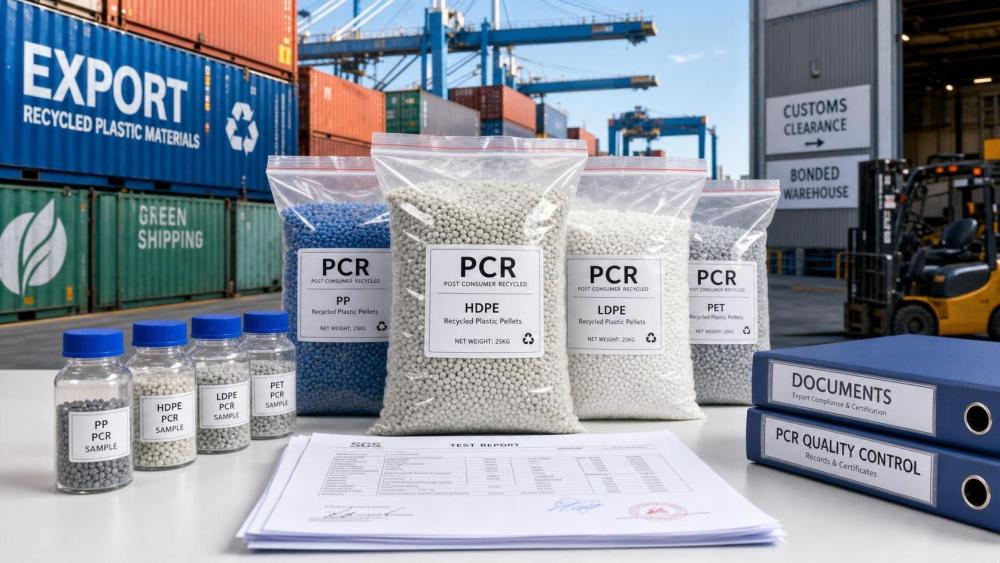
What the new Vietnam rule requires
According to the information provided, MOIT released Circular No. 18/2026/TT-BCT on July 14, 2026. The circular took effect on July 16, 2026.
The rule states that all imported PCR Plastic Washing & Pelleting products must be accompanied by a REACH declaration of conformity issued by the Chinese factory as well as a third-party test report that includes SVHC screening.
The same information states that shipments failing to meet these requirements will be returned at the port of entry. It also indicates that the new rule raises both the market access threshold and the document preparation cycle for Chinese recycled plastic pellet exports to Vietnam.
Where the pressure will likely be felt first
Export transactions tied directly to Vietnam
From an industry perspective, direct trading companies shipping recycled plastic pellets from China to Vietnam may face the most immediate operational impact. The reason is straightforward: the new requirement is tied to import clearance, which means documentation readiness becomes part of shipment viability rather than a post-order compliance step.
What deserves closer attention is the link between factory-issued declarations, third-party testing, and shipment timing. If either element is incomplete, the risk is no longer limited to delay; it extends to return of goods at the port.
Procurement and sourcing decisions
Procurement teams buying PCR plastic materials for Vietnam-bound supply chains may also be affected because supplier selection now has a stronger documentation dimension. Analysis shows that sourcing decisions may need to account not only for price and material availability, but also for whether the upstream factory can provide the required REACH conformity statement and corresponding SVHC-related test documentation on time.
This shifts attention toward documentation capability, lead-time coordination, and pre-shipment verification in addition to product specification.
Processing and manufacturing coordination
For processors and manufacturers involved in washing, recycling, or pelletizing activities, the rule may affect how export orders are prepared and scheduled. Observably, the requirement places more weight on the factory side of compliance support, since the declaration of conformity must come from the Chinese factory and must align with third-party test evidence.
The practical impact is likely to appear in batch preparation, document matching, and communication between production, quality, and export teams.
Logistics and supply chain service providers
Supply chain service providers, including teams handling customs-facing document flow and shipment coordination, are also likely to see added pressure. The rule increases the importance of document completeness before cargo arrival, especially where delivery schedules are tight.
For this group, the key change is that documentation risk can now turn into a border-return risk, making pre-departure checks more consequential.
What companies should review now
Whether current documents match the new entry condition
Companies involved in Vietnam-bound shipments should review whether their current paperwork actually covers the newly stated requirements: a REACH declaration of conformity issued by the Chinese factory and a third-party test report including SVHC screening. This is a practical checkpoint, not a general compliance exercise.
How much lead time documentation now requires
Analysis shows that document preparation time deserves immediate attention. The input information explicitly notes a longer preparation cycle, which means delivery planning, booking arrangements, and customer communication may need to be adjusted around documentation readiness rather than only cargo readiness.
How suppliers and customers will handle proof expectations
What deserves closer attention is the proof chain between factory, trader, and importer. Where multiple parties are involved, businesses may need to clarify in advance who is responsible for issuing the conformity declaration, arranging third-party testing, and confirming that the file set is complete before shipment.
Whether official wording changes in follow-up practice
Because the rule was issued on July 14 and took effect on July 16, companies should continue tracking whether any follow-up clarification, implementation interpretation, or document handling practice emerges around the new requirement. That is especially relevant for firms with shipments already scheduled close to the effective date.
Why this matters beyond a single document request
Analysis shows that this development should not be read as a routine paperwork update alone. It points to a stricter import-access condition for PCR plastic pellet trade into Vietnam, with compliance documentation moving closer to the center of commercial execution.
At the same time, it is more appropriate to understand this as an actionable regulatory signal rather than a fully settled long-term market outcome. The confirmed facts show a clear rule and an immediate enforcement consequence, but the broader commercial effects still depend on how consistently the requirement is applied in day-to-day trade flows.
How the market is likely to read the change for now
At this stage, the most balanced reading is that Vietnam's new requirement creates an immediate operational change for China-to-Vietnam PCR plastic pellet shipments and raises the threshold for compliant entry. It does not by itself define the full future direction of the market, but it clearly raises the importance of testing records, factory-issued declarations, and pre-shipment document control.
For industry participants, this is best understood as both a short-term execution issue and a regulatory signal worth continued monitoring.
Basis of this article and what still needs verification
This article is based on the user-provided news title, event date, and event summary concerning Vietnam's REACH compliance requirement for imported PCR Plastic Washing & Pelleting products.
For this type of industry update, commonly relevant source categories may include official government notices, company announcements, industry association updates, authoritative media coverage, and standard-related documents. A specific official source link was not provided in the input, so the exact official publication path still needs ongoing verification.
Further attention should remain on any subsequent official clarification, implementation details at the port level, and whether document handling expectations evolve in practice after the July 16, 2026 effective date.
Have questions about this sector analysis, or seeking best practices specific to your niche? Drop us a line below and let the senior consultants at APIM assist you.
We respect your privacy. Your information is strictly confidential.
Related News
- 00
0000-00
How does washing affect contamination in post-consumer recycled PP resins? - 00
0000-00
How does feedstock affect depolymerization equipment selection? - 00
0000-00
US Sets 213.44% Preliminary Antidumping Deposit on Chinese PTMEG - 00
0000-00
When should epoxy be used as a thermal interface material for semiconductors? - 00
0000-00
US Midterm Results Unlikely to Quickly Shift Recycled Plastics Market or Legislation