




ECHA Tightens NMP Limit in PCR Plastics to 10 ppm
Effective October 1, 2026, the European Chemicals Agency (ECHA) will apply a tighter REACH Annex XVII restriction to residual N-methyl-2-pyrrolidone (NMP) in end products containing post-consumer recycled plastic (PCR), lowering the limit from 50 ppm to 10 ppm. This is a rule change with direct relevance for exporters serving the EU market, especially businesses involved in PCR washing, pelleting, and modification, because it shifts the compliance threshold that can affect processing controls, export readiness, and certification-related pathways.
What the new restriction confirms
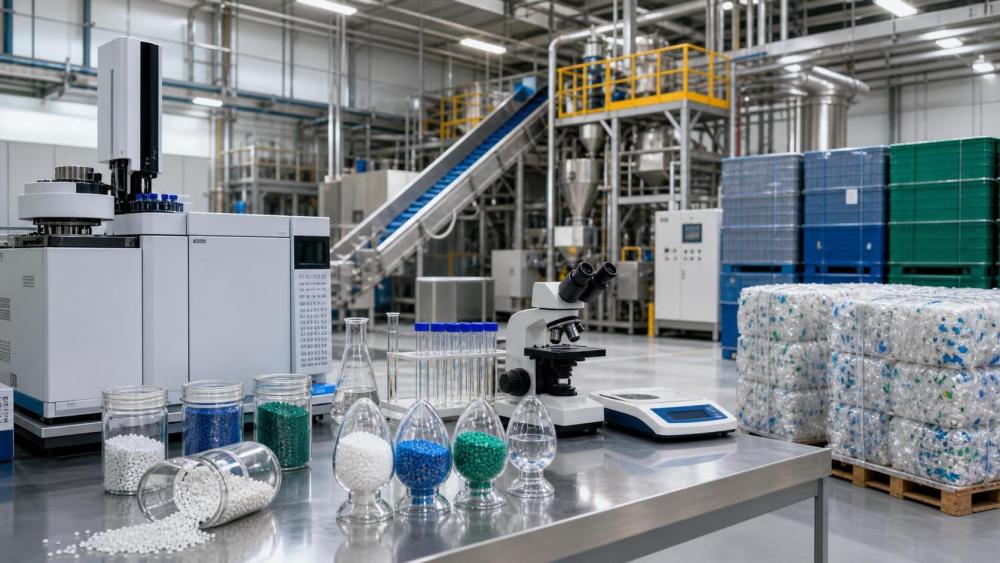
According to the execution notice issued by ECHA on July 28, 2026, a new residual limit for NMP in end products containing PCR will take effect on October 1, 2026. The limit is reduced from 50 ppm to 10 ppm under the new REACH Annex XVII restriction.
The requirement applies to PCR washing, pelleting, and modified products exported to the European Union. The information provided also indicates that the change directly affects process compliance and export certification pathways in the PCR Plastic Washing & Pelleting segment.
Where the pressure is likely to appear first
Export shipments linked to EU-bound PCR materials
From an industry perspective, exporters are likely to feel the impact first because the new threshold is tied to products entering the EU market. The main pressure point is whether EU-bound PCR-related products can meet the lower residual NMP requirement before shipment. What deserves closer attention is the alignment between product specifications, shipment documentation, and any compliance statements used in export transactions.
Processing stages in washing, pelleting, and modification
Analysis shows that the rule change is especially relevant to the processing stages named in the notice. For businesses operating in PCR washing, pelleting, or modification, the effect is not only technical but also procedural: the tighter threshold may require closer attention to process control, residual management, and the supporting records used to demonstrate conformity for EU customers or downstream compliance reviews.
Procurement and supplier qualification for recycled inputs
Observably, procurement teams and buyers handling PCR materials may also need to reassess supplier qualification standards. Where recycled inputs are used in products destined for the EU, the lower NMP limit may affect how suppliers are screened, what technical declarations are requested, and how purchasing decisions are linked to compliance risk rather than price or availability alone.
Testing, certification, and document review functions
Certification-related businesses and testing service providers may see increased attention because the notice directly references export certification pathways. It is more appropriate to understand this as a signal that documentation quality, test evidence, and consistency between reports and shipped goods may carry greater weight in transactions involving EU-bound PCR products.
Practical points companies should review now
Check whether existing compliance files still match the new threshold
Analysis shows that companies supplying PCR-related products to the EU should review whether current technical files, declarations, and internal compliance records still correspond to a 10 ppm limit rather than the previous 50 ppm benchmark. This is particularly relevant where documents were prepared under earlier assumptions.
Revisit testing and reporting arrangements
What deserves closer attention is whether current testing arrangements and report formats are adequate for a stricter residual threshold. The input information does not provide detailed enforcement methods, so this should not be treated as a settled execution outcome. Still, businesses may need to watch for how testing evidence and report language are used in customer acceptance, certification review, or shipment clearance processes.
Review supplier commitments and delivery planning
From an industry perspective, procurement and supply chain teams should pay attention to whether suppliers of washed, pelletized, or modified PCR materials can support the tighter requirement with consistent documentation. This may also affect delivery planning if additional checks are required before dispatch or customer release.
Track changes in customer specifications and trade paperwork
Observably, companies should monitor whether EU customers, tenders, or transaction documents begin to reflect the 10 ppm threshold more explicitly. Because no further detailed execution language is provided in the input, the prudent approach is to treat specification updates, compliance clauses, and documentary requests as areas requiring continued review rather than assuming a uniform market practice already exists.
Why this looks like an execution signal, not just a headline
Analysis shows that this development is better understood as an implemented compliance change with immediate operational meaning, rather than as a general policy discussion. The effective date is clear, the threshold change is specific, and the affected product scope is linked to EU exports of PCR washing, pelleting, and modification products.
At the same time, it remains necessary to observe how the rule is reflected in certification practice, customer documentation, and day-to-day trade execution. The input does not provide detailed enforcement scenarios, so the market still needs to watch how the requirement is interpreted in practical compliance reviews.
How the market should read this development
It is more appropriate to understand this update as a concrete tightening of an existing compliance boundary for EU-bound PCR products. The immediate significance is not only the lower NMP number itself, but the fact that it can influence processing discipline, export documentation, supplier qualification, and certification-related workflows in the PCR chain.
A measured reading is warranted. The rule change is already defined in terms of threshold and effective date, but the full business impact will depend on how buyers, compliance reviewers, and related service providers apply that requirement in practice after October 1, 2026.
Basis of this article and what still needs verification
This article is generated from the user-provided news title, effective date, and event summary. It is written on that basis alone and does not add unverified policy numbers, company cases, market figures, or source links.
For events of this kind, relevant source types typically include official notices, regulatory agency releases, customs or trade authority information, industry association updates, standards documents, and reporting from established industry media. A specific official source link was not provided in the input, so that point still requires verification.
Further observation is still needed on detailed policy interpretation, certification execution standards, tender document changes, market feedback, and how companies implement the requirement in actual export and delivery processes.
Have questions about this sector analysis, or seeking best practices specific to your niche? Drop us a line below and let the senior consultants at APIM assist you.
We respect your privacy. Your information is strictly confidential.
Related News
- 00
0000-00
How does washing affect contamination in post-consumer recycled PP resins? - 00
0000-00
How does feedstock affect depolymerization equipment selection? - 00
0000-00
US Sets 213.44% Preliminary Antidumping Deposit on Chinese PTMEG - 00
0000-00
When should epoxy be used as a thermal interface material for semiconductors? - 00
0000-00
US Midterm Results Unlikely to Quickly Shift Recycled Plastics Market or Legislation
Tag