




ECHA Tightens BaP Limit in PCR Plastics
On August 7, 2026, the European Chemicals Agency (ECHA) announced an update to REACH Annex XVII that will sharply tighten the benzo[a]pyrene (BaP) limit for post-consumer recycled (PCR) plastics from 1.0 mg/kg to 0.1 mg/kg starting February 1, 2027. The change also adds a batch-level documentation requirement for PCR pellets, sheets, and compounds entering the EU market, making this a compliance issue that deserves close attention from recycled plastics exporters, bio-based compound suppliers, importers, and procurement teams managing EU-bound materials.
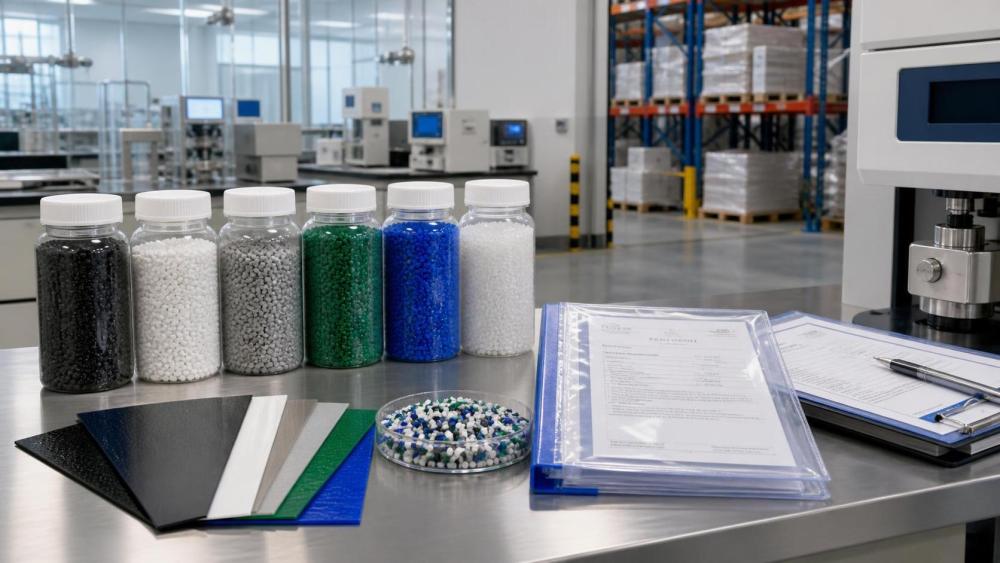
What the ECHA update confirms
According to the information provided, ECHA issued the notice on August 7, 2026 and confirmed that the BaP limit in PCR plastics under REACH Annex XVII will be reduced from the current 1.0 mg/kg to 0.1 mg/kg, with the revised requirement taking effect on February 1, 2027.
The same notice requires all suppliers of PCR pellets, sheets, and composite materials entering the EU market to provide batch-level migration and trace polycyclic aromatic hydrocarbons (PAHs) test reports certified under ISO 17225-3.
The revision is described as directly affecting the export compliance route for PLA/PBAT bio-based compounds and for PCR PET/PP washing and pelletizing businesses. It also means importers need to reassess the testing capability and supply chain traceability systems of Chinese suppliers.
Where the pressure is likely to appear first
Exporters of recycled pellets and compounds face a narrower compliance margin
From an industry perspective, suppliers shipping PCR pellets, sheets, and compounded materials into the EU are likely to feel the immediate impact because the allowable BaP threshold is being tightened by an order of magnitude. The practical effect is not only on product composition, but also on release readiness, batch management, and supporting documentation for each shipment.
PLA/PBAT and PCR PET/PP processors may need to revisit export workflows
Analysis shows that the update matters in particular for PLA/PBAT bio-based compounds and PCR PET/PP washing and pelletizing operations because these categories are explicitly identified in the provided information as directly affected. For these businesses, the issue is likely to center on whether existing testing routines, supplier controls, and export paperwork remain sufficient under the new limit and batch-reporting requirement.
EU importers will carry a stronger supplier verification burden
What deserves closer attention is the importer role. The information provided states that importers must reassess the testing capability and supply chain traceability systems of Chinese suppliers. That shifts part of the operational pressure toward supplier qualification, document review, and consistency checks before goods are placed on the EU market.
Procurement and supply chain service teams may see longer compliance touchpoints
Observably, the new requirement is not limited to laboratory performance. Procurement, trade compliance, and supply chain coordination teams may also be affected because batch-level reports tied to migration and trace PAHs testing can become part of order confirmation, delivery scheduling, and customer-facing documentation exchange.
What companies should review now
Whether current batch testing can support the new threshold
Analysis shows that one immediate question is whether current testing arrangements can support a BaP limit of 0.1 mg/kg for EU-bound PCR materials. For suppliers already serving the EU market, this is less about general quality claims and more about whether their batch-level test process, certification path, and release timing align with the revised requirement.
How traceability records connect to each shipment batch
What deserves closer attention is the traceability side of compliance. Because the requirement is framed around batch-level reporting, companies should review how production lots, test records, shipping documents, and customer specifications are linked. The business risk here is not only test failure, but also weak document continuity across the supply chain.
Which product lines and customers need earlier communication
For firms handling PLA/PBAT compounds or PCR PET/PP materials, it is more appropriate to identify affected product lines and EU-facing customers early rather than treating the rule as a generic regulatory notice. Commercial teams, compliance staff, and production planners may need aligned communication on which SKUs, contracts, and delivery windows could require updated supporting documents before the February 2027 effective date.
How importer and supplier expectations may diverge in practice
Observably, a regulatory requirement and day-to-day transaction practice do not always move at the same pace. Importers may start asking for stronger proof of testing capability and traceability before the formal implementation date, while some suppliers may still be operating on current routines. That gap is worth monitoring in customer negotiations, quotation terms, and pre-shipment document checks.
Why this looks like more than a routine limit update
Analysis shows that this development should not be read only as a numerical tightening of the BaP limit. The combination of a much lower threshold and mandatory batch-level certified reporting points to a stricter compliance expectation around recycled plastic inputs entering the EU market.
At the same time, it is more appropriate to understand this as both an immediate operational change and a longer-term regulatory signal. The immediate change is clear because the new limit and reporting requirement come with a defined effective date. The longer-term signal lies in the stronger emphasis on testability, lot-level control, and traceability for PCR materials, especially in cross-border supply relationships.
Further observation is still necessary. The provided information confirms the rule change and the affected areas, but market practice, customer enforcement pace, and the way companies adjust their export procedures will need continued attention.
How the market is likely to read this update
This update is significant because it turns compliance for EU-bound PCR plastics into a tighter combination of substance control and batch documentation control. For businesses in recycled plastics, bio-based compounds, and EU import channels, the issue is no longer limited to whether materials can be sold, but also whether every batch can be supported with the required test evidence.
From an industry perspective, the most balanced reading is that this is a confirmed near-term compliance change with broader strategic implications for supplier qualification and traceability management. It should not be overstated as a complete market reset, but it also should not be treated as a routine paperwork adjustment.
Basis of this article and what still needs verification
This article is based on the user-provided news title, event date, and event summary. The confirmed facts used here are limited to the stated ECHA notice, the August 7, 2026 timing, the February 1, 2027 effective date, the BaP limit change from 1.0 mg/kg to 0.1 mg/kg, the ISO 17225-3 batch-level migration and trace PAHs testing report requirement, and the stated impact on PLA/PBAT bio-based compounds, PCR PET/PP washing and pelletizing exporters, and importer reassessment of Chinese suppliers.
For this type of industry development, relevant source categories usually include official agency notices, company compliance communications, trade association updates, authoritative media coverage, and standard-setting organization documents. A specific official source link was not provided in the input, so the exact original publication path still requires ongoing verification. What should continue to be monitored is any further official wording, implementation clarification, and how importers translate the requirement into supplier onboarding and shipment documentation expectations.
Have questions about this sector analysis, or seeking best practices specific to your niche? Drop us a line below and let the senior consultants at APIM assist you.
We respect your privacy. Your information is strictly confidential.
Related News
- 00
0000-00
How does washing affect contamination in post-consumer recycled PP resins? - 00
0000-00
How does feedstock affect depolymerization equipment selection? - 00
0000-00
US Sets 213.44% Preliminary Antidumping Deposit on Chinese PTMEG - 00
0000-00
When should epoxy be used as a thermal interface material for semiconductors? - 00
0000-00
US Midterm Results Unlikely to Quickly Shift Recycled Plastics Market or Legislation
Tag