




ECHA Adds 3 Phthalates to SVHC List, PCR Export Filings Tighten
On July 19, 2026, the European Chemicals Agency (ECHA) added DIBP, DBP and BBP to the SVHC candidate list, creating an immediate compliance change for Chinese suppliers exporting PCR plastics to the EU. The development is directly relevant to exporters of PCR PET, PP and PE materials, including washed regrind, pellets and modified compounds, because it affects supply-chain notification duties, REACH-related documentation, buyer review and customs-facing paperwork in downstream sectors such as packaging, automotive interiors and appliance housings.
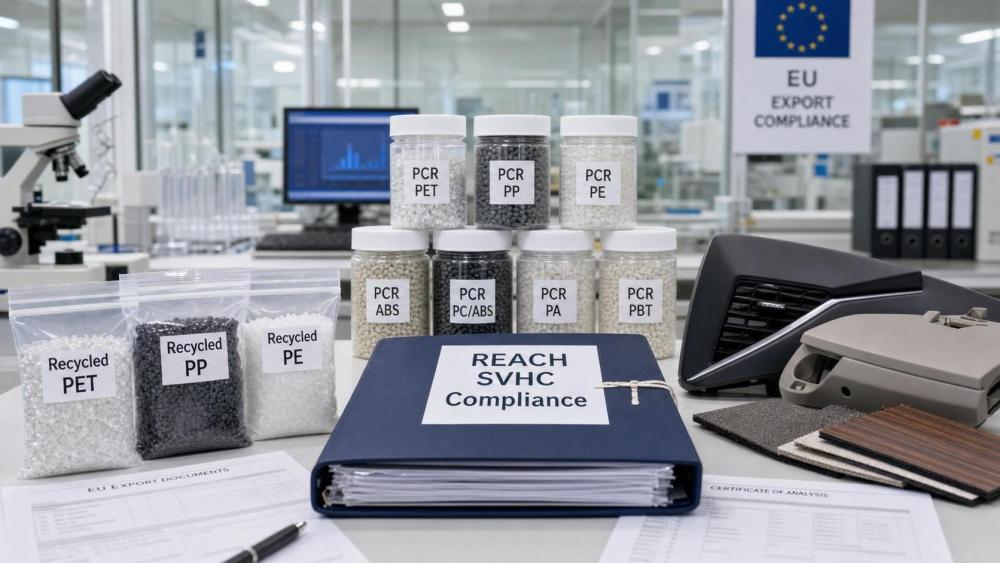
What the Rule Change Confirms
The confirmed event is that ECHA formally placed DIBP, DBP and BBP on the SVHC candidate list on July 19, 2026. Based on the provided information, this triggers notification obligations within the supply chain for Chinese suppliers exporting PCR plastic products containing these substances to the EU. The affected product scope expressly includes PCR PET, PP and PE granules, washed and pelletized recycled materials, and modified composite materials. The same information also confirms that suppliers will need to provide compliance documents aligned with REACH requirements, and that the change directly affects importer purchasing decisions and customs clearance processes in PCR application areas such as packaging, automotive interior parts and appliance housings.
Where the Immediate Pressure Will Appear
Export transactions will face document-sensitive screening
For companies directly exporting PCR plastics to the EU, the main impact is likely to appear first in transaction documentation and customer review. Because the change is tied to SVHC listing and REACH-related compliance files, exporters will need to pay closer attention to whether product declarations, material disclosures and supporting compliance statements remain consistent with the new regulatory status described in the provided information.
Buyers and sourcing teams may tighten material acceptance
Importers and procurement teams using PCR materials in packaging, automotive interiors and appliance housings are likely to treat this as a purchasing control issue. The reason is practical: once listed substances become part of supplier communication and compliance documentation requirements, sourcing decisions can become more dependent on whether suppliers can present complete and updated files that support procurement review and shipment acceptance.
Processors using recycled feedstock may need stronger traceability
For processors and manufacturers buying PCR pellets, washed regrind or modified compounds, the exposure lies in upstream material traceability and downstream declarations. Analysis shows that any business handling recycled feedstock for EU-bound products should pay attention to how substance information is passed through the chain, because the provided event summary explicitly links the listing to supply-chain notification obligations and REACH-compliant documentation.
Customs and supply-chain coordination may become more procedural
Supply-chain service providers and trade support teams may see the impact in shipment preparation and clearance coordination. The confirmed information already indicates an effect on customs clearance processes, so the operational issue is less about market sentiment and more about whether documentation sets are complete, internally consistent and ready for buyer or border-facing review.
What Companies Should Check Now
Review whether current declarations still match the new listing status
From an industry perspective, the first practical question is whether existing compliance declarations for EU-bound PCR materials still accurately reflect the new SVHC listing status of DIBP, DBP and BBP. This is not the same as concluding that every product is non-compliant; it is a prompt to verify whether documents, statements and internal review language remain usable under the updated rule context described in the event summary.
Check supplier communication paths for notification obligations
What deserves closer attention is how notification duties are handled across multiple tiers of the PCR supply chain. Companies exporting recycled pellets, washed materials or modified compounds should examine whether upstream substance information can be collected and passed forward in a form that supports customer disclosure and REACH-related documentation.
Prepare for procurement and delivery friction in sensitive applications
Businesses serving packaging, automotive interior and appliance housing applications should pay particular attention to procurement cycles and delivery coordination. Observably, when a rule change affects purchasing decisions and customs processes, even unchanged commercial orders can face delays if technical files, declarations or supporting compliance records are requested again during buyer review.
Keep execution language under observation
The provided information confirms the rule change and its immediate compliance relevance, but it does not provide detailed enforcement wording, review thresholds or downstream contract language. For that reason, companies should continue watching how official phrasing, customer requirements and practical documentation expectations are expressed in later communications and commercial documents.
How This Development Is Best Understood
Analysis shows that this update is best understood as a live compliance signal rather than a distant policy discussion. The listing itself is a confirmed regulatory change, and the supplied summary already links it to notification duties, REACH documentation and customs-facing consequences. At the same time, it is more appropriate to avoid treating all downstream execution outcomes as settled, because the input does not provide detailed implementation practice, enforcement patterns or market feedback. The current significance lies in the fact that documentation, sourcing review and shipment readiness now deserve immediate attention.
A Practical Reading of the Market Impact
At this stage, the event is more appropriately understood as an implemented rule change with direct operational implications for PCR plastics exported to the EU. The most immediate effect is likely to be seen in compliance declarations, buyer screening and clearance preparation, especially where recycled materials move through several supply-chain tiers before reaching packaging, automotive interior or appliance applications. A measured conclusion is that companies should treat this as an active compliance adjustment point while continuing to monitor how execution language and market responses develop.
Basis of This Article
This article is based on the user-provided news title, event date and event summary. For developments of this kind, relevant source categories typically include official regulator announcements, trade or customs authority notices, industry association updates, standard-setting documents and reporting by authoritative media. No specific official source link was provided in the input, so the exact official reference still needs to be verified on an ongoing basis. Follow-up attention should remain on detailed policy wording, compliance interpretation, procurement document changes, tender language, market feedback and how companies implement the requirement in practice.
Have questions about this sector analysis, or seeking best practices specific to your niche? Drop us a line below and let the senior consultants at APIM assist you.
We respect your privacy. Your information is strictly confidential.
Related News
- 00
0000-00
Do polyolefin hot melt adhesives bond well to polyethylene? - 00
0000-00
Korean Study Finds PLA Barely Degrades in Landfill After 320 Days - 00
0000-00
How to assess batch consistency from a thermal potting compounds supplier - 00
0000-00
How much weight can carbon fiber reinforced plastics save in cars? - 00
0000-00
Switching from PS to ABS Sheet Extrusion: Equipment Checks
Tag