




China Tightens PCR Pellet Export Checks on MFR Variability
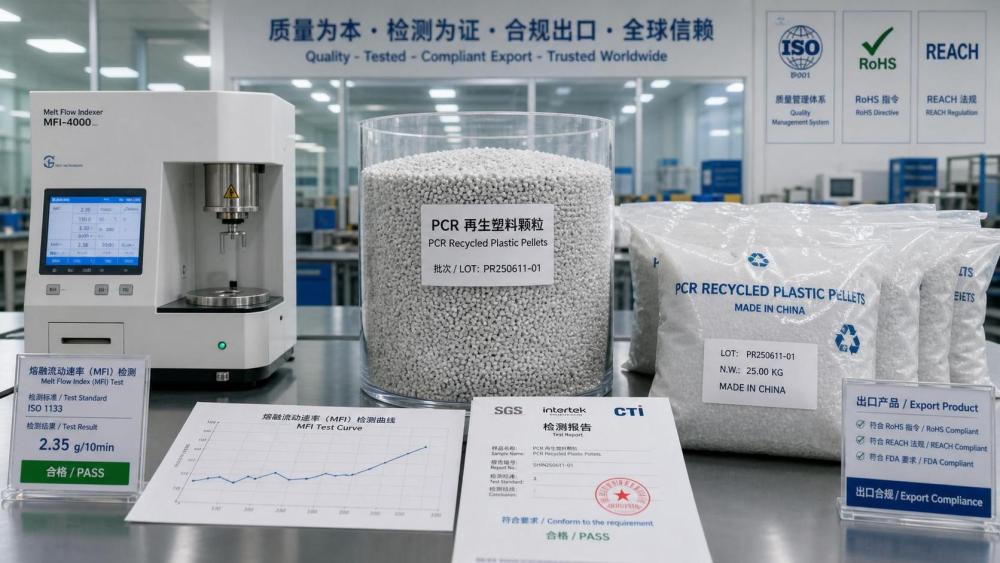
On July 1, 2026, China put into effect the 2026 edition of its quality supervision guidance for PCR Plastic Washing & Pelleting exports, adding a new mandatory control on MFR dispersion with a CV limit of 8% or below and requiring original curve charts from a third-party laboratory. For exporters of recycled plastic pellets, overseas buyers, and teams handling supplier approval and contract renewal, this is a notable development because it shifts batch stability from a general quality concern into a documented export inspection requirement.
What the new export requirement formally changes
According to the information provided, the General Administration of Customs of China implemented the technical guidance document titled PCR Plastic Washing & Pelleting Export Quality Supervision Guidance (2026 Edition) on July 1, 2026.
The confirmed change is that MFR dispersion has been added for the first time as a mandatory inspection item. The specified threshold is a coefficient of variation, or CV value, of no more than 8%.
The same update also requires exporters to provide original curve charts issued by a third-party laboratory. The stated focus of this change is batch-to-batch stability in recycled plastic pellets.
The information provided also indicates that this requirement directly affects supplier admission reviews by European and North American brand owners, as well as renewals of long-term procurement agreements for PCR raw materials.
Where the pressure is likely to appear in the value chain
Export-facing pellet suppliers will face tighter proof requirements
From an industry perspective, suppliers shipping PCR pellets overseas are the most directly exposed. The impact is likely to center on export inspection preparation, batch release decisions, and the completeness of technical documents submitted with shipments. What deserves closer attention is not only whether a batch meets the numerical limit, but also whether the supporting third-party laboratory records are ready in the form now required.
Overseas procurement teams may raise the bar for supplier screening
Analysis shows that buyers, especially those linked to European and North American brand supply chains, may treat this rule as an additional screening point in supplier qualification. The impact is most likely to appear in onboarding reviews, periodic audits, and discussions around renewal of long-term supply arrangements. Procurement teams will need to watch whether suppliers can consistently demonstrate batch stability under the updated inspection framework.
Manufacturing users of PCR material may need closer alignment with sourcing teams
For processors and manufacturers that depend on PCR pellets as input material, the immediate effect may not be customs compliance itself, but continuity and consistency of approved supply. Observably, any disruption in supplier approval or contract renewal could affect sourcing decisions, qualification timing, or delivery planning. Their attention is likely to turn to how upstream suppliers document compliance and whether supply remains commercially stable.
Testing and compliance service roles become more operationally important
The requirement for original third-party laboratory curve charts means compliance support functions may become more embedded in routine shipment preparation. For service providers and in-house compliance teams, the impact is likely to show up in documentation workflows, report review, and coordination between production, quality, and export teams.
What companies should track now
Whether internal batch control can match the new inspection item
Companies involved in PCR pellet exports should pay close attention to whether their current quality control process can identify and manage MFR dispersion at the batch level in a way that aligns with the mandatory CV threshold now in force.
How third-party laboratory materials are prepared and retained
The new requirement is not limited to a pass or fail result. It also requires original curve charts from a third-party laboratory. In practical terms, companies should focus on whether testing records, report formats, and file retention practices are sufficient for export review and customer-facing verification.
How this affects supplier qualification and contract discussions
Because the information provided links the change directly to supplier admission by European and North American brand owners and to long-term contract renewals, exporters and trading teams should watch how customers translate the rule into approval checklists, contract clauses, and documentation requests. The policy signal and the commercial implementation may not move at exactly the same pace.
Whether customer communication needs to be updated quickly
For companies already supplying PCR materials, a practical point is how to communicate the new inspection requirement to existing customers and prospective buyers. What deserves closer attention is whether customers expect immediate documentation updates, revised qualification files, or confirmation of testing arrangements before future shipments or renewal talks proceed.
Why this looks like more than a short-lived procedural change
Analysis shows that the update should not be read only as a routine technical adjustment. By naming MFR dispersion as a mandatory inspection item and tying documentation to third-party laboratory original curves, the requirement points to a stronger emphasis on measurable batch consistency in PCR pellet exports.
At the same time, it would be premature to treat every commercial consequence as settled. Observably, the confirmed facts establish a firmer compliance threshold, but how different buyers apply that threshold in audits, sourcing decisions, and contract renewals still needs continued observation.
It is more appropriate to understand this as a clear regulatory signal with immediate operational consequences, while also recognizing that some downstream commercial responses will become visible only as buyers and suppliers adjust their approval processes.
How to read the significance of this update
The main industry meaning of this development is that export quality supervision for PCR plastic pellets is becoming more specific in how batch stability must be demonstrated. That matters most for exporters, supplier management teams, and overseas buyers working with recycled material supply chains.
A neutral reading is that this is neither a minor paperwork revision nor a fully concluded market outcome. It is more appropriate to understand it as an actionable compliance change that also serves as a longer-term signal about what customers may increasingly expect from PCR raw material suppliers.
Basis of this article and points for continued verification
This article is based on the user-provided news title, event date, and event summary concerning the July 1, 2026 implementation of the PCR Plastic Washing & Pelleting Export Quality Supervision Guidance (2026 Edition), including the newly mandatory MFR dispersion limit of CV no more than 8% and the requirement for original third-party laboratory curve charts.
For this type of industry update, commonly relevant source categories may include official notices, company disclosures, industry association information, authoritative media coverage, and standard or technical guidance documents. A specific official source link was not provided in the input, so the exact document access path still requires ongoing verification.
Further observation should focus on whether there are additional official clarifications, how buyers incorporate the requirement into supplier approval procedures, and whether documentation expectations evolve in practice after implementation.
Have questions about this sector analysis, or seeking best practices specific to your niche? Drop us a line below and let the senior consultants at APIM assist you.
We respect your privacy. Your information is strictly confidential.
Related News
- 00
0000-00
Do polyolefin hot melt adhesives bond well to polyethylene? - 00
0000-00
Korean Study Finds PLA Barely Degrades in Landfill After 320 Days - 00
0000-00
How to assess batch consistency from a thermal potting compounds supplier - 00
0000-00
How much weight can carbon fiber reinforced plastics save in cars? - 00
0000-00
Switching from PS to ABS Sheet Extrusion: Equipment Checks