




China Opens Green Export Pre-Clearance for PCR and EVOH
On June 26, 2026, China’s General Administration of Customs introduced a new green materials export pre-clearance channel at 12 key ports including Ningbo, Shenzhen, and Qingdao. The measure applies to PCR plastic pelleting equipment and EVOH high-barrier packaging materials that meet ISO 14040 life-cycle certification requirements, cutting the average inspection cycle from 72 hours to 43 hours after companies submit technical parameters and recycled-material traceability documents. For exporters, manufacturers, and supply chain teams involved in PCR Plastic Washing & Pelleting and EVOH High-barrier Packaging, the update is worth close attention because it directly affects documentation readiness, shipment timing, and customs coordination.
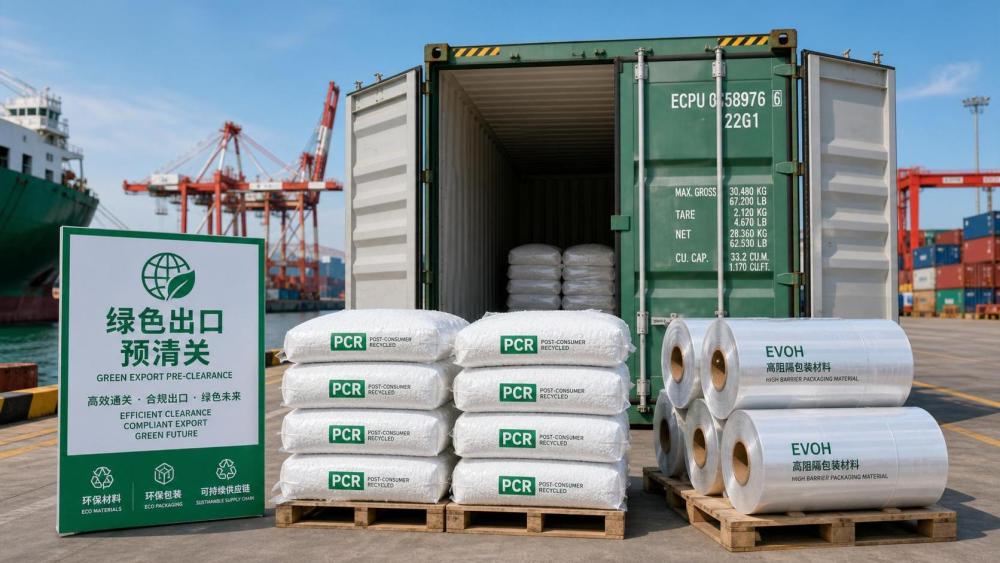
What the new customs channel covers
According to the information provided, the new export pre-clearance channel took effect on June 26, 2026. It is being implemented at 12 key Chinese ports, with Ningbo, Shenzhen, and Qingdao specifically mentioned.
The measure covers two product categories: PCR Plastic Washing & Pelleting and EVOH High-barrier Packaging. Eligibility is tied to compliance with ISO 14040 life-cycle certification requirements.
To use the channel, companies need to submit technical parameters and proof of recycled-material traceability. Under this arrangement, the average inspection period is reduced from 72 hours to 43 hours.
Where the operational impact is likely to appear
Export planning moves closer to document readiness
From an industry perspective, direct trading companies are likely to feel the most immediate impact in shipment preparation and customs scheduling. A shorter inspection window can improve dispatch planning, but only when technical files and traceability evidence are prepared in a form that matches customs expectations.
What deserves closer attention is that the time gain is linked to pre-submitted materials, not simply to product category alone. For export teams, the practical issue is whether internal document workflows can support the faster channel.
Equipment and material suppliers face tighter coordination needs
For processing manufacturers and material suppliers, the policy update may affect the handoff between production, quality documentation, and export compliance. PCR plastic pelleting equipment and EVOH high-barrier packaging materials are both technical product groups, so the link between specifications and customs filing becomes more important when clearance timing improves.
Analysis shows that suppliers may need closer coordination between engineering, compliance, and shipping functions, especially where technical parameters and recycled-content traceability are prepared by different teams.
Logistics and trade service providers may need process adjustments
Supply chain service providers, including customs coordination and shipment management teams, may be affected in scheduling and client communication. A reduction from 72 to 43 hours changes the margin available for inspection-related delays, which can alter booking rhythms and delivery expectations.
Observably, the main issue is not only faster customs handling, but whether service providers can align document collection and submission timing with that faster cycle.
What companies should watch now
Check whether products clearly fit the stated scope
Companies should first confirm whether their exports fall within the two stated categories: PCR Plastic Washing & Pelleting and EVOH High-barrier Packaging. The policy signal is specific, so scope interpretation matters before teams assume a broader benefit.
Prepare technical and traceability files in advance
The practical entry point for the new channel is document submission. Businesses should pay close attention to the availability, consistency, and internal ownership of technical parameters and recycled-material traceability records, since those materials are explicitly named in the policy summary.
Separate policy signal from actual execution
It is more appropriate to understand this as an operational improvement tied to conditions, not as an automatic reduction in every export lead time. Companies should distinguish between the announced average inspection reduction and the actual timing they can achieve in day-to-day shipments.
Keep customer communication aligned with customs reality
For sales, account management, and delivery teams, customer communication may need updating. If clients are told that customs handling is becoming faster, that message should remain tied to eligibility, documentation quality, and port execution rather than be presented as a guaranteed transit outcome.
Why this looks like more than a routine clearance tweak
As an editorial observation, this update can be read as a targeted procedural signal rather than a complete market shift. The combination of product scope, ISO 14040 life-cycle certification, and recycled-material traceability indicates that customs handling is being connected more directly to documented environmental attributes.
Analysis shows that the current significance lies less in the headline percentage improvement alone and more in the fact that export efficiency is being linked to verifiable technical and traceability documentation. That makes this relevant not only for customs teams, but also for compliance, production, and commercial planning.
At the same time, it would be premature to treat the measure as a fully settled long-term outcome across all export scenarios. Continued observation is still needed on how consistently the channel operates in practice across the covered ports and product flows.
How this update is best understood today
At this stage, the new green materials export pre-clearance channel is best understood as a concrete short-term operating change with possible longer-term signaling value. The confirmed fact is that eligible PCR and EVOH export products can move through a faster average inspection cycle when required documents are submitted. The broader industry meaning, however, depends on how companies adapt their compliance and shipment processes around that requirement.
A neutral reading is that this is neither a minor formality nor a definitive structural result. It is a practical customs development that deserves attention from exporters and supply chain operators, while its broader implications still require continued observation.
Basis of this article and what still needs verification
This article is based on the user-provided news title, event date, and event summary. The specific official source link was not provided in the input, so the exact originating document still needs to be verified through continued review.
For this type of industry update, relevant source categories usually include official customs notices, company disclosures, industry association updates, authoritative media coverage, and standard-related documentation. Further monitoring should focus on any additional official wording, implementation details at the named ports, and whether the scope or documentation requirements are clarified in later releases.
Have questions about this sector analysis, or seeking best practices specific to your niche? Drop us a line below and let the senior consultants at APIM assist you.
We respect your privacy. Your information is strictly confidential.
Related News
- 00
0000-00
Do polyolefin hot melt adhesives bond well to polyethylene? - 00
0000-00
Korean Study Finds PLA Barely Degrades in Landfill After 320 Days - 00
0000-00
How to assess batch consistency from a thermal potting compounds supplier - 00
0000-00
How much weight can carbon fiber reinforced plastics save in cars? - 00
0000-00
Switching from PS to ABS Sheet Extrusion: Equipment Checks