




ASEAN Fast-Track Opens for PCR Recycling Equipment
On June 27, 2026, five Southeast Asian countries moved to introduce a faster import pathway for certain China-made PCR plastic washing and pelletizing line equipment, linking customs technical filing to pre-certification requirements tied to ISO 14021:2023 and ASTM D7611. For exporters, buyers, compliance teams, and supply chain service providers, the change is worth watching because it directly affects certification timing, document preparation, and delivery planning for equipment entering these markets.
A documented change in import processing
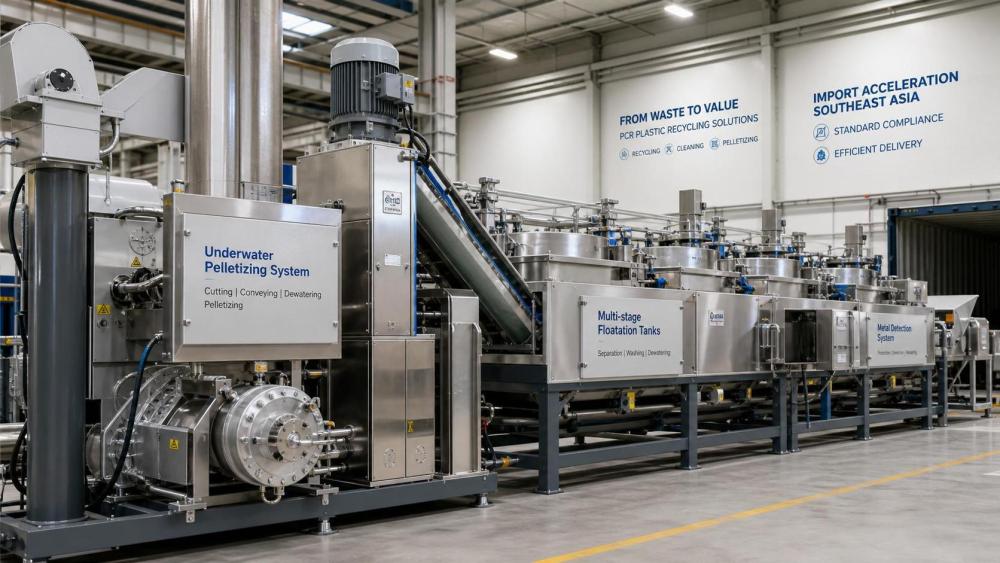
Confirmed information shows that Thailand, Vietnam, Malaysia, Indonesia, and the Philippines signed the Memorandum on Green Customs Clearance for Recycled Plastics within ASEAN on June 27, 2026. Under that arrangement, China-made PCR plastic washing and pelletizing line equipment that meets ISO 14021:2023 and ASTM D7611 is eligible for an import pre-certification fast track. After certification documents are submitted, customs technical filing is to be completed within five working days, which is described as a 60% reduction from the previous process.
The first batch of equipment covered includes underwater pelletizing systems, multi-stage flotation tanks, and online metal detection modules.
Where the immediate pressure points may shift
Exporters may see timing move from production to documentation
From an industry perspective, Chinese exporters of PCR washing and pelletizing equipment are likely to feel the impact first in pre-shipment preparation. If market access depends on whether equipment can enter the five-day filing channel, the quality and completeness of technical and certification documents become more important in the export cycle. What deserves closer attention is whether internal document control, product classification, and standards alignment are ready before shipment rather than being handled later in the delivery process.
Buyers and project owners may adjust procurement schedules
For importers, plant investors, and procurement teams, the practical effect may appear in tender timing, order sequencing, and installation planning. Analysis shows that a shorter customs technical filing period can matter most when projects depend on synchronized delivery of core modules such as underwater pelletizing systems, flotation stages, and online detection units. The relevant point is not only faster processing, but whether procurement files, technical specifications, and supplier submissions are prepared in a way that fits the stated standards basis.
Certification and testing service providers may face tighter turnaround expectations
Certification-related companies and testing service providers may also be affected because the fast-track mechanism is tied to defined standards. Observably, when customs filing time is compressed, upstream review of declarations, technical descriptions, and standards correspondence can become a bottleneck if documentation is inconsistent. That places more operational weight on evidence packages that support ISO 14021:2023 and ASTM D7611 alignment.
Logistics and after-sales teams may need cleaner handoffs
Supply chain service providers and after-sales support teams may be affected in a more operational way. If import filing can move faster, handoff errors in packing lists, module descriptions, inspection records, or installation documentation may become more visible. It is more appropriate to understand this as a coordination issue across export, customs, and service functions rather than as a guarantee of smoother delivery in every case.
What companies should check now
Reconfirm which equipment falls within the current scope
The current confirmed scope mentions underwater pelletizing systems, multi-stage flotation tanks, and online metal detection modules. Companies should therefore review whether their exported or procured configurations clearly match the categories currently identified, rather than assuming that all recycling-line equipment will be treated the same way.
Prepare standards-based files before shipment milestones
Analysis shows that document readiness is likely to become a practical control point. Exporters and buyers should pay close attention to technical files, product descriptions, test-related materials, and any supporting records used to demonstrate consistency with ISO 14021:2023 and ASTM D7611. The event summary confirms the standards reference, but it does not provide the full execution detail, so companies should avoid treating the pathway as automatic without careful file review.
Watch for execution language in customs and bid documents
What deserves closer attention is how the memorandum is reflected in later customs wording, procurement documents, and supplier qualification requirements. Where projects are being tendered or approved across the five markets, changes in specification language or filing expectations may become the first practical sign of implementation.
Link faster filing with delivery and traceability controls
A shorter filing period does not remove the need for delivery discipline. Companies should pay attention to whether export documentation, module traceability, acceptance records, and after-sales support files remain consistent across contract, shipment, and installation stages. That is especially relevant when multiple covered modules are supplied as part of one integrated line.
Why this looks like an execution signal, not a finished rule story
Observably, this development is more than a general policy statement because it identifies participating countries, the memorandum framework, the standards reference, the filing timeline, and the first equipment categories covered. At the same time, it is not yet a complete picture of market practice. Analysis shows that the event is best read as an execution signal with direct trade and compliance implications, while detailed implementation, filing interpretation, and procurement adoption still require follow-up observation.
From an industry perspective, the key question is not simply whether the process is faster on paper, but how consistently the five-day customs technical filing target is applied across actual equipment transactions and documentation reviews.
How this development is best understood for now
At this stage, the announcement points to a concrete shift in import processing for qualifying PCR recycling equipment entering five Southeast Asian markets. The clearest industry meaning lies in certification timing, standards-based documentation, and transaction planning rather than in any confirmed expansion of market demand or automatic clearance outcomes. It is more appropriate to understand this as a real rule-related change with immediate practical relevance, while leaving room for continued observation of how it is executed in trade, customs, and procurement workflows.
Basis of this article and what still needs verification
This article is based on the user-provided news title, event date, and event summary. For developments of this type, source categories typically relevant to verification include official announcements, releases from regulatory authorities, customs or trade administration information, industry association updates, standards organization documents, and reporting by authoritative media. A specific official source link was not provided in the input, so it still needs to be checked on an ongoing basis.
Further observation is still needed on detailed policy language, certification interpretation in practice, changes to bid and procurement documents, market feedback, and how companies implement the process during actual export and import execution.
Have questions about this sector analysis, or seeking best practices specific to your niche? Drop us a line below and let the senior consultants at APIM assist you.
We respect your privacy. Your information is strictly confidential.
Related News
- 00
0000-00
Do polyolefin hot melt adhesives bond well to polyethylene? - 00
0000-00
Korean Study Finds PLA Barely Degrades in Landfill After 320 Days - 00
0000-00
How to assess batch consistency from a thermal potting compounds supplier - 00
0000-00
How much weight can carbon fiber reinforced plastics save in cars? - 00
0000-00
Switching from PS to ABS Sheet Extrusion: Equipment Checks