




Plastic Depolymerization Technology for Recycling: Cost and Yield Factors
Plastic Depolymerization Technology for Recycling: Cost and Yield Factors
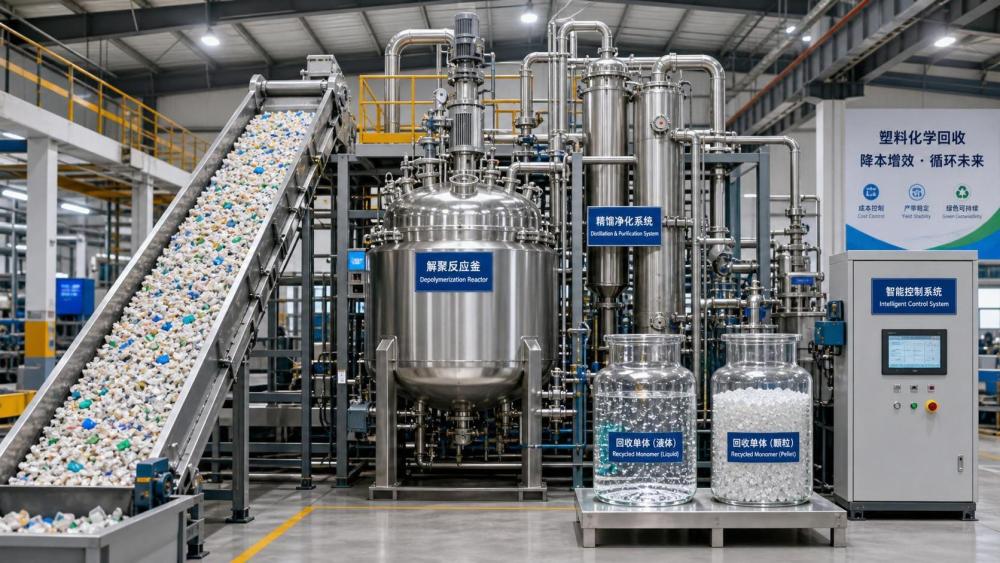
Plastic depolymerization technology for recycling is moving from pilot interest to procurement review.
The reason is simple. Many waste streams are too mixed, too contaminated, or too degraded for high-value mechanical recycling.
That creates an opening for chemical routes that break polymers back into monomers, oligomers, or usable feedstock intermediates.
For buyers, though, the real issue is not technical promise alone.
The real issue is whether plastic depolymerization technology for recycling can deliver stable yield, manageable cost, and bankable product quality.
In practice, project economics depend on more than reactor chemistry.
Feedstock preparation, energy demand, catalyst life, purification load, and offtake pricing often decide commercial viability.
That is why procurement teams need a sharper framework before comparing vendors or funding capacity.
Why Plastic Depolymerization Technology for Recycling Is Being Reconsidered
Recent market changes make this technology harder to ignore.
Brand owners want recycled content with tighter quality consistency.
Regulations are also pushing traceability, landfill diversion, and lower carbon material strategies.
Mechanical recycling still matters, but it has boundaries.
Multilayer films, contaminated packaging, textile blends, and difficult engineering plastics often create low-value output or processing instability.
Plastic depolymerization technology for recycling targets that gap by recovering chemical building blocks from harder streams.
Common pathways include glycolysis, methanolysis, hydrolysis, solvolysis, and catalytic depolymerization.
PET gets most attention, but polyamides, polyurethanes, polystyrene, and some polyolefin pathways are also advancing.
Still, technology selection should start with economics, not headlines.
The Main Cost Drivers Behind Commercial Adoption
When evaluating plastic depolymerization technology for recycling, cost usually breaks into five operational blocks.
1. Feedstock acquisition and preparation
This is often underestimated.
Mixed plastic bales may look cheap, but sorting, washing, drying, shredding, and contaminant removal can quickly raise input cost.
Higher contamination usually means lower yield and more purification steps later.
2. Energy use and thermal efficiency
Depolymerization can be energy intensive, especially where high temperature, pressure, or solvent recovery is required.
Heat integration, recovery systems, and residence-time control strongly affect operating cost.
3. Catalyst and reagent consumption
Catalyst performance influences conversion rate, selectivity, and by-product formation.
A highly active catalyst can improve yield, but replacement frequency and poisoning risk may erase that benefit.
4. Purification and finishing
Recovered monomers do not automatically meet downstream specifications.
Distillation, filtration, decolorization, solvent recovery, and moisture control can represent a large share of total cost.
5. Scale and uptime
A process may look attractive at pilot scale yet struggle at industrial throughput.
Unplanned shutdowns, fouling, and feedstock variability can damage cost competitiveness very quickly.
What Actually Determines Yield
Yield is not one number. That is where many procurement comparisons go wrong.
Some suppliers report conversion yield. Others report isolated product yield or saleable yield after purification.
For plastic depolymerization technology for recycling, the saleable yield is the number that matters most.
Several factors shape that result:
- Polymer purity in the incoming waste stream
- Moisture, labels, inks, additives, and fillers
- Particle size and feed consistency
- Reaction temperature, pressure, and residence time
- Catalyst selectivity and deactivation behavior
- Losses during filtration, solvent recovery, and polishing
A small improvement in feed quality can sometimes outperform a major reactor upgrade.
That matters because better yield often comes from disciplined upstream control, not only better chemistry.
In real projects, yield consistency matters as much as peak yield.
Offtake partners care about predictable specification windows, not occasional laboratory highs.
Comparing Technology Routes by Procurement Logic
Not all depolymerization routes fit the same waste stream or business model.
A practical comparison should focus on feedstock fit, product value, and process complexity.
This is why plastic depolymerization technology for recycling should be sourced against a defined waste profile.
Buying a flexible claim is less useful than buying a proven fit.
Where Commercial Risk Usually Hides
The biggest risk is often between the process blocks, not inside one unit operation.
For example, a system may achieve good depolymerization results but fail to control downstream purification cost.
Another common issue is feedstock mismatch.
A vendor may validate the process on cleaner waste than the material available in your region.
That gap can weaken yield, raise residue volumes, and increase maintenance frequency.
There is also a pricing risk.
Recovered monomer economics depend on virgin resin spreads, energy markets, and customer acceptance of recycled-origin material.
In other words, plastic depolymerization technology for recycling must be assessed as a supply chain system, not a standalone reactor sale.
Questions to Ask Before Selecting a Supplier
A disciplined sourcing process can remove a lot of uncertainty early.
- What exact feedstock specification was used for performance data?
- Is yield reported as conversion, recovered intermediate, or saleable product?
- What are the energy inputs per ton at industrial scale?
- How often are catalysts, solvents, or key consumables replaced?
- What impurity ranges can the system tolerate without major yield loss?
- What residue, wastewater, or off-gas treatment is required?
- What product specifications have already been accepted by downstream buyers?
- What uptime has been proven outside demonstration runs?
These questions help separate scalable plastic depolymerization technology for recycling from well-presented pilot data.
A Practical Decision Framework
For most projects, the best decision comes from ranking four things together.
- Feedstock security over several years
- Saleable yield under realistic contamination levels
- Full operating cost, including purification and waste treatment
- Market value and qualification pathway for recovered output
If one of these is weak, the project may still be technically interesting but commercially fragile.
That is the central lesson in plastic depolymerization technology for recycling today.
The strongest opportunities usually come from narrow, well-characterized waste streams and clear offtake agreements.
A careful procurement review should therefore start with feedstock mapping, then move to yield proof, cost transparency, and buyer qualification.
That sequence keeps investment decisions grounded in operating reality rather than broad circularity claims.
Have questions about this sector analysis, or seeking best practices specific to your niche? Drop us a line below and let the senior consultants at APIM assist you.
We respect your privacy. Your information is strictly confidential.
Related News
- 00
0000-00
Do polyolefin hot melt adhesives bond well to polyethylene? - 00
0000-00
Korean Study Finds PLA Barely Degrades in Landfill After 320 Days - 00
0000-00
How to assess batch consistency from a thermal potting compounds supplier - 00
0000-00
How much weight can carbon fiber reinforced plastics save in cars? - 00
0000-00
Switching from PS to ABS Sheet Extrusion: Equipment Checks