




Chemical Depolymerization vs Mechanical Recycling: When Does It Pay Off?
Chemical Depolymerization vs Mechanical Recycling: where does the value really appear?
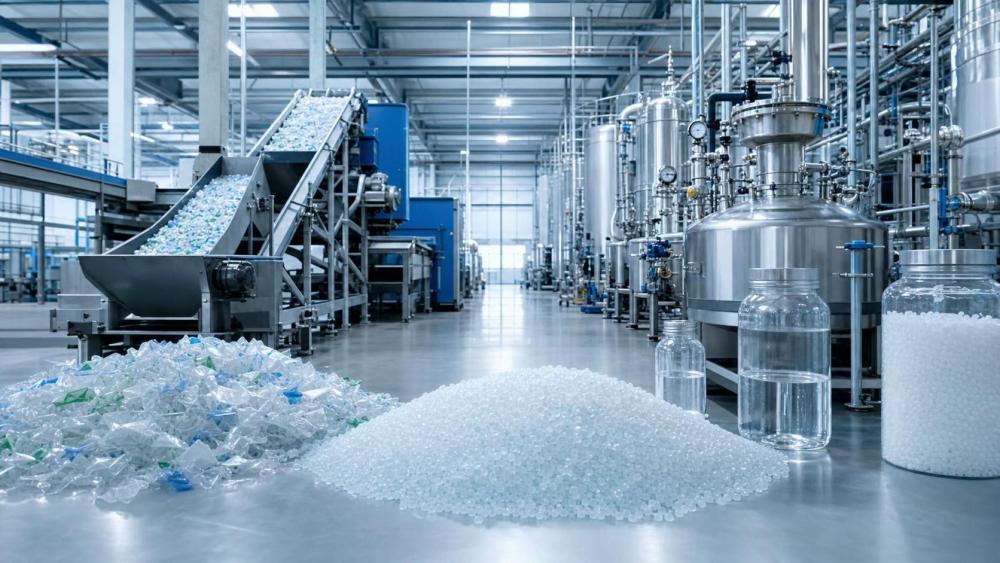
Plastic recovery is no longer judged by sustainability claims alone. It is now tied to margin pressure, resin volatility, compliance exposure, and long-term material security.
That is why chemical depolymerization keeps attracting attention. It promises access to near-virgin feedstock, but the economics only work under specific conditions.
Mechanical recycling remains the lower-cost route in many applications. Yet it also faces limits when contamination, mixed structures, or property loss reduce usable output.
In practice, the better choice depends on waste stream quality, processing intensity, target polymer, and the value of the final application.
Across advanced polymers, films, compounds, and industrial converting, APIM often frames this issue as a material decision rather than a slogan. That approach matters here.
Is chemical depolymerization simply a more advanced form of recycling?
Not exactly. Mechanical recycling keeps the polymer chain mostly intact. It sorts, washes, grinds, melts, and reprocesses plastic into another usable form.
Chemical depolymerization breaks polymers back into monomers or smaller chemical intermediates. Those outputs can then be purified and repolymerized into new resin.
The difference is more than technical. It changes capex, energy demand, yield profile, impurity tolerance, and certification potential for sensitive end uses.
For PET, polyamides, and some specialty streams, chemical depolymerization can recover value that mechanical recycling struggles to preserve. For simple, clean polyolefin streams, that advantage often narrows.
A practical way to read the market is this: mechanical recycling protects cost efficiency, while chemical depolymerization aims to protect molecular quality and application flexibility.
When does chemical depolymerization start to pay off?
The payoff appears when recovered monomer has a strong premium over downgraded recycled resin. That usually happens in regulated or performance-critical markets.
Packaging with food-contact pressure is one example. Electronics, medical components, and engineered polyester or polyamide applications can also justify the extra processing cost.
Feedstock quality still matters. Chemical depolymerization is not a magic answer for highly mixed or poorly sorted waste with unknown additives, fillers, or multilayer combinations.
The route becomes more attractive when four conditions align:
- A defined polymer family is available at consistent volume.
- End users need higher purity or traceable circular content.
- Mechanical recycling would create severe property loss or color limits.
- Local energy, logistics, and purification costs do not erase the resin premium.
In other words, chemical depolymerization pays when quality recovery matters more than simple tonnage recovery.
Which route makes more sense for films, compounds, and engineering plastics?
This is where decisions become less generic. Material format and application history change the answer quickly.
Clear PET bottle streams often support both routes, but the economics differ by contamination, label residue, and food-grade targets.
Multilayer films are harder. Mechanical recycling may produce low-grade output if EVOH, adhesives, inks, or barrier layers stay in the stream.
Glass-filled compounds create another challenge. Fillers, flame retardants, and stabilizer packages can reduce the quality of mechanically recycled pellets.
APIM’s broader materials coverage is useful here because the real question is often tied to formulation, not only polymer family.
The table below helps frame the most common comparison points.
What cost assumptions usually distort the decision?
The biggest mistake is comparing gate cost alone. A lower recycling cost does not guarantee better economics if the output displaces only low-value resin.
Another common error is ignoring pretreatment. Sorting, de-inking, washing, drying, and contaminant control can reshape the cost curve before core processing even begins.
Energy pricing matters more in chemical depolymerization. Regions with volatile power and fuel costs can see project economics change faster than expected.
Yield assumptions also need discipline. Lab performance and commercial output are rarely identical, especially during startup or when feedstock quality drifts.
More realistic evaluation usually includes these checkpoints:
- Incoming waste variability by season, source, and contamination profile.
- Recovered output value by application, not by headline resin price.
- Offtake certainty for premium recycled or chemically recovered material.
- Downtime, purification losses, and by-product management costs.
- Regulatory or certification value attached to traceable circular content.
That broader view is especially important in sectors using specialty films, compounds, adhesives, or precision molded parts, where failure costs are high.
If both options are available, how should the decision be made?
A useful starting point is to ask what the recycled output must replace. If it only needs to serve noncritical applications, mechanical recycling often wins.
If the target is near-virgin performance, strict purity, or advanced compliance positioning, chemical depolymerization deserves a closer financial model.
This does not have to be a binary choice. Some of the strongest strategies use mechanical recycling for cleaner streams and chemical depolymerization for difficult fractions.
That portfolio logic is increasingly relevant in global polymer supply chains. It reduces dependence on one waste profile and improves resilience against resin market swings.
Before moving forward, it helps to organize the decision around a short screening list:
- What polymer families dominate the available waste stream?
- How much contamination can the end application tolerate?
- Is circular content valued by contract, regulation, or brand requirement?
- Can the process run at enough scale to absorb fixed costs?
- Will the output have stable demand over several procurement cycles?
Where technical and market signals are still unclear, structured data from platforms such as APIM can help compare material performance, process limits, and supply-side development.
What is the most practical takeaway?
Chemical depolymerization is not automatically the superior route. It pays off when molecular recovery creates access to higher-value applications or more defensible compliance positions.
Mechanical recycling remains commercially strong when streams are clean, volumes are predictable, and downgraded properties do not damage end-use value.
The strongest decisions usually come from matching recovery method to waste quality, application risk, and pricing power in the target market.
The next step is straightforward: map feedstock type, estimate delivered output value, test contamination sensitivity, and compare both routes on total economics rather than technology image.
That process tends to reveal where chemical depolymerization adds real commercial value, and where mechanical recycling already does the job more efficiently.
Have questions about this sector analysis, or seeking best practices specific to your niche? Drop us a line below and let the senior consultants at APIM assist you.
We respect your privacy. Your information is strictly confidential.
Related News
- 00
0000-00
Do polyolefin hot melt adhesives bond well to polyethylene? - 00
0000-00
Korean Study Finds PLA Barely Degrades in Landfill After 320 Days - 00
0000-00
How to assess batch consistency from a thermal potting compounds supplier - 00
0000-00
How much weight can carbon fiber reinforced plastics save in cars? - 00
0000-00
Switching from PS to ABS Sheet Extrusion: Equipment Checks