




When UV Curable Adhesive Systems Outperform Thermal Bonding
When UV Curable Adhesive Systems Outperform Thermal Bonding
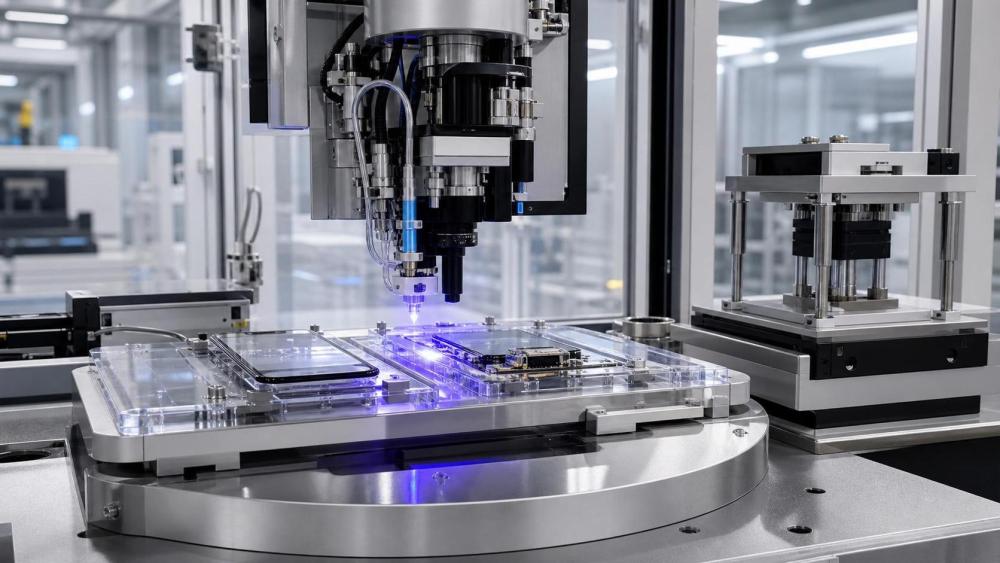
In manufacturing projects where speed, precision, and material compatibility matter, UV curable adhesive systems often deliver clear advantages over thermal bonding.
For teams balancing throughput, quality, and substrate protection, the choice is rarely just about cure speed.
It is about process control, energy use, rework risk, and long-term assembly consistency.
Thermal bonding still has a strong place in industrial production.
It works well for heat-tolerant parts, broad bond lines, and high-mass assemblies.
But in many application-driven projects, UV curable adhesive systems solve problems that heat-based joining methods struggle to manage efficiently.
This matters even more when parts include optical films, engineered plastics, electronics, thin substrates, or temperature-sensitive coatings.
The practical question is simple: when does UV curing create a better production outcome than thermal bonding?
Why the Comparison Matters in Real Production
Thermal bonding depends on heat transfer, dwell time, and cooling control.
That can slow line speed and create stress on sensitive materials.
UV curable adhesive systems work differently.
They stay workable during placement, then cure on demand under controlled UV exposure.
That shift from heat-driven bonding to light-triggered bonding changes the whole assembly logic.
It can reduce thermal distortion, shorten takt time, and improve positioning accuracy.
In actual operations, those gains are often more valuable than raw bond strength alone.
The Main Performance Difference
Thermal bonding exposes the full assembly area to heat.
UV curable adhesive systems apply energy mainly to the adhesive chemistry during the cure event.
That difference supports better outcomes in projects where dimensions, optics, or adjacent components are easily affected by temperature.
Where UV Curable Adhesive Systems Clearly Win
Not every assembly should move away from thermal bonding.
Still, several conditions strongly favor UV curable adhesive systems.
- Transparent or translucent substrates allow efficient light penetration and rapid curing.
- Thin plastic parts need bonding without warpage, sink, or heat marks.
- Precision assemblies require time for alignment before immediate fixture strength.
- Electronics or sensors cannot tolerate high process temperatures.
- Production lines need fast cycling with low oven or hot-plate energy demand.
- Mixed-material designs need joining across plastics, glass, metals, and coated surfaces.
When several of these factors appear together, UV curable adhesive systems often become the more practical solution.
1. Sensitive Substrates Need Lower Thermal Stress
Engineering plastics, films, and optical components can deform under thermal bonding conditions.
This is common with PC, PMMA, PET, TPU, and coated multilayer structures.
UV curable adhesive systems reduce the need to heat the part mass.
That helps preserve shape, gloss, clarity, and coating integrity.
2. Fast Handling Improves Throughput
Thermal bonding often includes heating, hold time, and cooling.
That sequence can limit productivity, especially in multi-station lines.
UV curable adhesive systems can reach handling strength in seconds.
For high-volume projects, that time difference directly affects output and labor efficiency.
3. Accuracy Matters Before Cure
Many assemblies need a short positioning window.
Once alignment is confirmed, the bond should lock immediately.
This is one of the strongest use cases for UV curable adhesive systems.
The process supports controlled assembly, then near-instant fixture after exposure.
Applications Where UV Curing Often Outperforms Heat
From recent market shifts, the clearest signal is the spread of lightweight, multi-material product design.
That trend creates more situations where UV curable adhesive systems deliver better process reliability.
In these applications, thermal bonding may still work.
But it usually demands tighter temperature management and more caution around material limits.
Decision Factors Before Switching from Thermal Bonding
A better curing method does not guarantee a better production outcome.
The switch should be based on part design, curing access, and validation requirements.
Check These Conditions First
- Light access: UV curable adhesive systems need direct or engineered exposure paths.
- Substrate transmission: some materials block UV wavelengths too strongly.
- Bond line geometry: shadowed areas may need dual-cure or secondary cure design.
- Surface condition: coatings, mold release, and contamination affect adhesion.
- Environmental resistance: humidity, chemicals, and temperature cycling still matter.
- Regulatory needs: medical, automotive, and electronics projects need documented validation.
This also means process engineers should evaluate curing equipment together with adhesive selection.
Material choice alone is not enough.
Common Risks and How to Reduce Them
The main risk is incomplete cure in blocked areas.
Another issue is selecting a formulation with good speed but weak long-term durability.
The practical response is straightforward.
- Map the bond area for shadow zones before pilot runs.
- Match lamp wavelength and intensity to adhesive chemistry.
- Run thermal cycling, humidity, and chemical exposure tests early.
- Confirm fixture time, full cure profile, and rework limits.
- Document surface preparation as a controlled production step.
How to Build a Stronger Application Plan
In practical business settings, the strongest decisions combine technical fit with process economics.
When reviewing UV curable adhesive systems, focus on these evaluation points.
- Does the adhesive protect sensitive substrates better than thermal bonding?
- Can the line gain measurable output from faster curing?
- Will lower heat exposure reduce scrap, haze, or warpage?
- Can the curing setup fit the actual part geometry without compromise?
- Does the supplier provide application data for the target environment?
If the answers are mostly yes, UV curable adhesive systems are likely more than a material alternative.
They become a process upgrade.
That upgrade can support tighter quality control, lower energy consumption, and more predictable assembly performance.
Final Takeaway
UV curable adhesive systems outperform thermal bonding when speed, precision, and substrate protection carry equal weight.
They are especially effective in transparent assemblies, heat-sensitive plastics, compact electronics, and appearance-critical products.
The strongest results come from treating curing as a full application system, not only an adhesive purchase.
Review light access, substrate behavior, bond design, and validation needs together.
That approach makes it easier to identify where UV curable adhesive systems can deliver faster production, lower thermal risk, and more dependable bonding performance.
Have questions about this sector analysis, or seeking best practices specific to your niche? Drop us a line below and let the senior consultants at APIM assist you.
We respect your privacy. Your information is strictly confidential.
Related News
- 00
0000-00
Do polyolefin hot melt adhesives bond well to polyethylene? - 00
0000-00
Korean Study Finds PLA Barely Degrades in Landfill After 320 Days - 00
0000-00
How to assess batch consistency from a thermal potting compounds supplier - 00
0000-00
How much weight can carbon fiber reinforced plastics save in cars? - 00
0000-00
Switching from PS to ABS Sheet Extrusion: Equipment Checks