




Fast Cure UV-Curing Materials: When Speed Impacts Bond Quality
Fast Cure UV-Curing Materials: When Speed Impacts Bond Quality
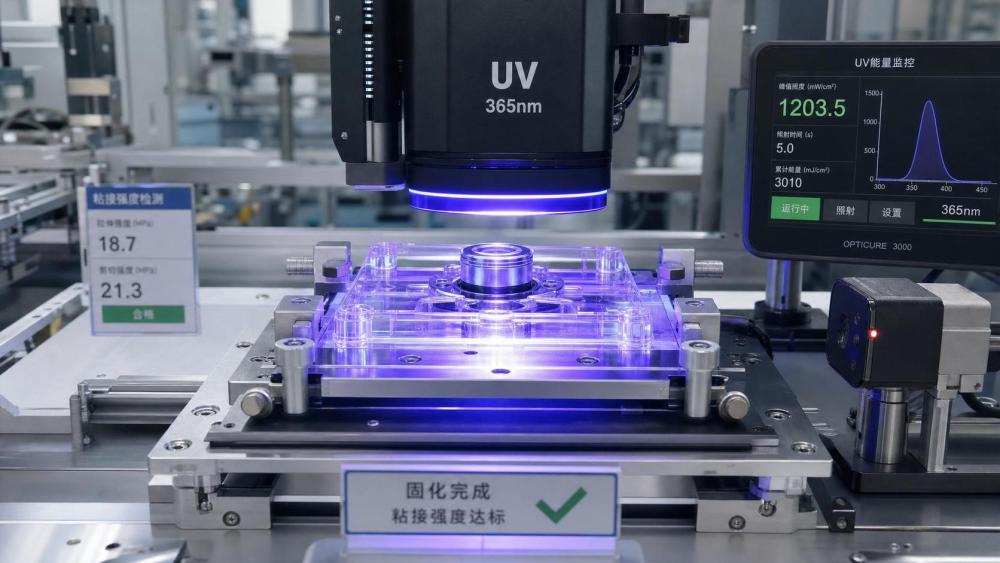
Fast cure UV-curing materials are built for speed. That speed is attractive when output targets rise and labor windows shrink.
But curing faster does not always mean bonding better. In many production lines, the first problem appears as inconsistency, not total failure.
A bond may pass initial inspection, then weaken after heat, vibration, humidity, or chemical exposure. That is where fast cure UV-curing materials demand closer control.
The core issue is simple. Cure speed changes how quickly the adhesive wets, levels, crosslinks, and anchors to the surface.
If those steps happen out of balance, bond quality can drop even when cycle time improves. In practical terms, faster throughput may hide a larger reliability risk.
This matters across electronics, medical devices, automotive subassemblies, optical components, and industrial equipment. In each case, speed must be matched with process discipline.
Why fast cure UV-curing materials can reduce bond consistency
Fast cure UV-curing materials react quickly under light exposure. That sounds straightforward, but the bond forms through several linked physical and chemical events.
First, the material must spread well on the substrate. Then it must maintain contact long enough for proper interfacial adhesion to develop.
If polymerization begins too early, the adhesive can lock before it fully wets the surface. This often lowers contact area and creates weak spots.
Shrinkage is another concern. Rapid crosslinking can create internal stress, especially on dissimilar materials with different thermal or mechanical behavior.
That stress may not be visible at first. Later, it can show up as edge lifting, microcracks, haze, delamination, or reduced peel strength.
Oxygen inhibition also complicates surface cure. Some fast cure UV-curing materials harden well inside the bondline but leave a tacky or undercured surface.
That becomes more noticeable in thin films, clear assemblies, or low-energy substrates. The result is not just cosmetic. It can affect long-term performance.
The main bond quality risks to watch in production
When fast cure UV-curing materials are pushed for shorter takt time, several failure patterns tend to appear more often.
- Incomplete wetting on metal, glass, plastics, or coated surfaces
- Higher residual stress after cure
- Surface tack or uneven cure depth
- Reduced peel, shear, or impact resistance over time
- Sensitivity to lamp aging, dose drift, and shadowed areas
- Greater variation between shifts, lines, or suppliers
These risks increase when line teams rely only on cure time. Time alone does not define whether fast cure UV-curing materials reached a stable bond state.
A short cycle may still produce undercure in deeper sections. It may also overharden the exposed surface while the interface remains weak.
That is why bond quality evaluation should connect UV dose, substrate condition, adhesive thickness, and final service environment.
What usually causes bond failure with fast cure UV-curing materials
In real operations, bond problems rarely come from one factor alone. They usually come from small process mismatches that build into a larger quality gap.
1. Surface preparation is too weak
Oil, mold release, dust, moisture, or handling residue can block adhesion. Fast cure UV-curing materials have less time to compensate for poor surface condition.
2. Light intensity is inconsistent
Lamp output changes over time. Distance, reflector cleanliness, and line speed also affect dose. A stable setting on paper may not be stable at the joint.
3. Adhesive geometry is not controlled
Bondline thickness matters. If the adhesive is too thick, cure may be uneven. If it is too thin, wetting and stress distribution may suffer.
4. Substrate compatibility is assumed, not verified
Plastics such as PC, PMMA, ABS, PET, and modified compounds respond differently to fast cure UV-curing materials. Coatings and additives can change behavior again.
5. Post-cure conditions are ignored
Some systems continue to stabilize after initial exposure. Early handling, packing, or stress loading can disturb the bond before it fully develops.
How to evaluate fast cure UV-curing materials without missing hidden defects
A visual pass is not enough. Fast cure UV-curing materials need a test plan that reflects both immediate cure behavior and long-term reliability.
A practical evaluation framework should include the following checks.
- Measure actual UV intensity and total dose at the bonding position.
- Verify bondline thickness and dispense consistency.
- Run peel, lap shear, or tensile tests after full conditioning.
- Add heat, humidity, thermal cycling, and chemical exposure tests.
- Compare fresh, aged, and shift-to-shift production samples.
- Review failure mode, not only failure force.
Failure mode tells a deeper story. Cohesive failure, adhesive failure, substrate fracture, and mixed failure indicate very different process realities.
This is especially important when fast cure UV-curing materials are used in safety-related parts, sealed electronics, or transparent assemblies.
Process controls that improve bond reliability
The best response is not simply slowing everything down. In many cases, fast cure UV-curing materials work well when the surrounding process is tightened.
A few controls usually deliver the biggest improvement.
- Standardize cleaning and handling before bonding
- Control surface energy on difficult plastics
- Monitor lamp performance with scheduled calibration
- Set acceptable windows for dose, distance, and line speed
- Use fixtures that keep bondline geometry stable
- Define hold time before load, packing, or downstream assembly
Where risk is higher, incoming material checks also help. Viscosity drift, storage history, and batch age can shift how fast cure UV-curing materials behave.
This also means supplier communication matters. Material data should cover cure window, substrate limits, shrinkage behavior, and recommended validation methods.
A practical comparison table for decision-making
This kind of table helps teams compare fast cure UV-curing materials beyond brochure claims. Speed matters, but process margin matters more.
When faster curing is still the right choice
Fast cure UV-curing materials are not the problem by themselves. In many applications, they are the best option for productivity, precision, and low thermal load.
They work especially well when the joint is accessible to light, substrates are consistent, and process variables are tightly managed.
The better question is not whether to use them. The better question is whether the curing profile matches the real bonding task.
In recent manufacturing changes, that distinction has become more important. Production lines now demand both speed and traceable reliability.
That is why fast cure UV-curing materials should be selected with joint design, substrate behavior, testing depth, and operating risk in mind.
Final takeaways for better bond quality
Fast cure UV-curing materials can increase output, reduce waiting time, and support efficient assembly. Yet speed changes bond formation in ways that are easy to underestimate.
The most reliable approach is to treat cure speed as one parameter inside a larger bonding system. Surface prep, dose control, bondline design, and aging tests all matter.
When defects appear, start with the interface, not only the lamp setting. When evaluating new fast cure UV-curing materials, validate for service life, not just initial pass rate.
That approach gives teams a clearer way to reduce scrap, limit process risk, and build bonds that stay dependable after production pressure moves on.
Have questions about this sector analysis, or seeking best practices specific to your niche? Drop us a line below and let the senior consultants at APIM assist you.
We respect your privacy. Your information is strictly confidential.
Related News
- 00
0000-00
How does washing affect contamination in post-consumer recycled PP resins? - 00
0000-00
How does feedstock affect depolymerization equipment selection? - 00
0000-00
US Sets 213.44% Preliminary Antidumping Deposit on Chinese PTMEG - 00
0000-00
When should epoxy be used as a thermal interface material for semiconductors? - 00
0000-00
US Midterm Results Unlikely to Quickly Shift Recycled Plastics Market or Legislation