




FDA Broadens Food-Contact Use for UV Adhesives
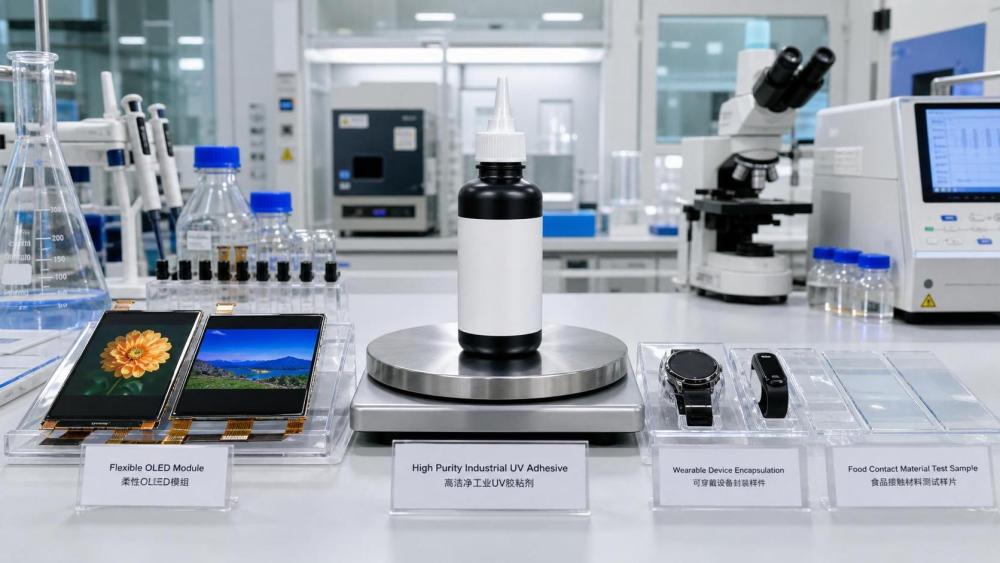
On June 27, 2026, the U.S. FDA issued a final rule updating 21 CFR Part 175.105, expanding the permitted food-contact use of UV-curing industrial adhesives to newer electronic structural applications including flexible OLED modules and wearable device encapsulation. The change took effect immediately, but it is tied to two defined compliance conditions: a photoinitiator residue threshold of no more than 0.05 ppm and verification of post-UV crosslinking integrity. For exporters, especially Chinese UV adhesive suppliers serving U.S.-bound business, this is not just a scope expansion; it also creates a near-term documentation and validation task that can affect shipment readiness, declarations, and customer acceptance before the September 30, 2026 deadline.
What the FDA rule change confirms
The confirmed facts are limited but commercially significant. The FDA released the final rule on June 27, 2026. The rule updates 21 CFR Part 175.105 and extends the applicable range of UV-curing industrial adhesives in food-contact materials to new electronic structure components, specifically including flexible OLED modules and wearable device encapsulation. The expanded use is conditional rather than open-ended: products must meet the newly stated photoinitiator residue limit of ≤0.05 ppm and must also complete verification of post-ultraviolet crosslinking integrity.
The revision became effective on the date of release. The provided information also states that Chinese exporters of UV adhesives must complete supplemental validation for all export batches and update their DoC declarations by September 30, 2026.
Where the practical pressure is likely to appear
Export shipments and customer-facing compliance files
From an industry perspective, exporters are among the first parties likely to feel the effect because the rule is already in force and because the required follow-up work is batch-specific. The main impact is likely to fall on export release preparation, technical file updates, and customer submission packages. What deserves closer attention is whether existing DoC language, test support, and shipment documents fully reflect both the new residue threshold and the crosslinking verification requirement.
Manufacturing and process validation on the production side
For manufacturers, the likely impact is less about the existence of a new market opening and more about whether current production and curing processes can be evidenced against the new conditions. Analysis shows that any business supplying adhesives for the newly covered applications will need to pay attention to validation sequencing, retained technical records, and how batch-level conformity is demonstrated during delivery or customer audits. This does not confirm any new testing method beyond the input facts, but it does indicate that process proof is now commercially relevant.
Procurement and supplier review in downstream electronics programs
Buyers and sourcing teams involved in flexible electronic structures may also need to adjust their review points. The reason is straightforward: the allowed use has expanded, but only under defined compliance conditions. In practice, procurement may need to check whether supplier declarations, supporting reports, and delivery documentation are updated in time for ongoing or upcoming orders. For sourcing decisions, the focus is likely to shift from product availability alone to documentation completeness and timing of compliant batch release.
Testing, documentation, and supply-chain coordination
Supply-chain service providers and parties handling compliance support may be affected through scheduling and document control rather than through the material change itself. Observably, the immediate effective date combined with the September 30, 2026 update requirement can create pressure around validation turnaround, declaration revision, and handoff between manufacturing, quality, and export functions. The operational issue is not only whether a product can qualify, but whether supporting records can move with the shipment in a usable form.
What companies should watch now
Check whether existing declarations still match the revised scope
Analysis shows that companies should first review whether current DoC statements still accurately describe intended use, compliance basis, and applicable batches under the revised rule. Where the permitted application scope has changed, unchanged declarations may create avoidable trade friction even if the product itself is technically suitable.
Focus on residue and crosslinking evidence, not only product labeling
What deserves closer attention is the evidence package behind compliance. The input confirms two explicit conditions: the photoinitiator residue threshold and post-UV crosslinking integrity verification. Companies should therefore pay close attention to whether their internal records, test support, and customer-facing technical materials clearly address both points rather than relying on older scope statements or general product descriptions.
Review export batch timing against the September deadline
For Chinese UV adhesive exporters, the stated requirement to complete supplemental validation for all export batches by September 30, 2026 makes timing a practical issue. Observably, this can affect shipment planning, customer communication, and release sequencing. The current information does not provide detailed enforcement mechanics, so it is more appropriate to treat timeline management as a compliance precaution that deserves immediate internal review.
Track how customers and counterparties translate the rule into purchasing documents
The provided facts do not include downstream implementation language, but from an industry perspective, companies should monitor whether customers, importers, or project teams begin revising specification sheets, qualification checklists, or tender documentation to reflect the new conditions. That is especially relevant where delivery approval depends on documentary alignment as much as on material performance.
Why this looks like an execution signal, not just a policy headline
Analysis shows that this development is better understood as an already effective compliance change with immediate execution consequences, rather than as a distant policy direction. The scope expansion is real, but it is paired with defined technical conditions and a stated deadline for supplemental validation and DoC updates for Chinese exporters. At the same time, it would be premature to overstate market impact because the input does not provide details on enforcement practice, customer adoption speed, or the exact form of downstream documentation review.
From an industry perspective, the most useful reading is that the rule has moved beyond discussion and into document-and-validation work. Further observation is still warranted around implementation language, customer acceptance criteria, and how consistently counterparties apply the new requirements in live transactions.
How this development is best understood for now
This FDA update matters because it expands the permitted use boundary for UV-curing industrial adhesives in food-contact material contexts tied to newer flexible electronic structures, while at the same time narrowing acceptable use through explicit residue and verification conditions. That combination creates both a commercial opening and a compliance filter.
It is more appropriate to understand this news as a landed rule change with short-term operational implications, rather than as a purely symbolic regulatory signal. The key issue for companies is not only whether the scope has broadened, but whether validation records, declarations, and export batches can be aligned fast enough to support compliant delivery.
Basis of this article and what still needs verification
This article is generated from the user-provided news title, event date, and event summary. For events of this kind, market participants would typically also compare information against sources such as official regulatory releases, notices from competent authorities, customs or trade-administration updates, industry association communications, standard-setting documents, and reporting by established trade media. No specific official source link was provided in the input, so the exact official publication link still needs to be verified on an ongoing basis.
Further follow-up should focus on any detailed implementation wording, certification or declaration practice, changes in customer or tender documentation, market feedback from affected supply-chain participants, and how companies complete batch-level execution before the stated deadline.
Have questions about this sector analysis, or seeking best practices specific to your niche? Drop us a line below and let the senior consultants at APIM assist you.
We respect your privacy. Your information is strictly confidential.
Related News
- 00
0000-00
Do polyolefin hot melt adhesives bond well to polyethylene? - 00
0000-00
Korean Study Finds PLA Barely Degrades in Landfill After 320 Days - 00
0000-00
How to assess batch consistency from a thermal potting compounds supplier - 00
0000-00
How much weight can carbon fiber reinforced plastics save in cars? - 00
0000-00
Switching from PS to ABS Sheet Extrusion: Equipment Checks