




Thermally Conductive Epoxy Bonding Materials: Key Failure Risks to Check
Thermally Conductive Epoxy Bonding Materials: Key Failure Risks to Check
Thermally conductive epoxy bonding materials sit at a difficult intersection of heat transfer, adhesion, and structural durability.
When they work well, they support thermal paths, hold assemblies together, and protect long-term reliability.
When they fail, the damage is rarely limited to one bond line.
Heat rise, warpage, electrical instability, delamination, and safety complaints often follow.
That is why failure review should start before a field return, not after it.
For teams handling inspection, process control, and product safety, the real question is practical.
Which failure risks in thermally conductive epoxy bonding materials deserve the earliest attention?
Start With the Failure Pattern, Not the Datasheet
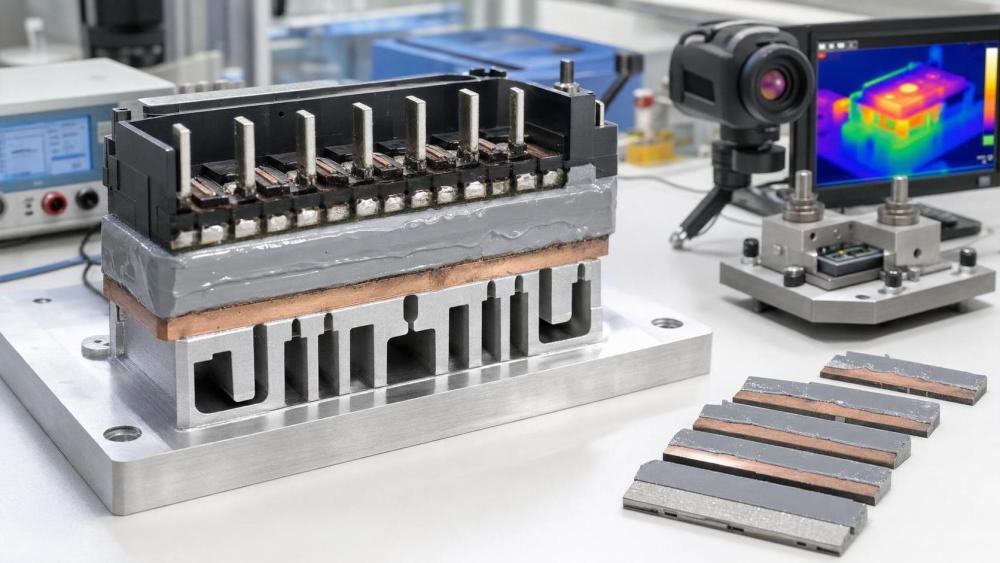
A datasheet can confirm nominal performance, but it cannot explain why a bonded part failed in production.
Thermally conductive epoxy bonding materials are highly sensitive to the full application system.
Filler type, resin chemistry, substrate surface, cure schedule, and bond line thickness all matter together.
In actual operations, many failures look like material defects but start as process variation.
A reliable check should connect symptom, root cause, and verification method.
- Rising interface temperature may point to poor filler dispersion or voids.
- Edge lifting may indicate cure shrinkage, contamination, or thermal expansion mismatch.
- Brittle cracking often links to over-cure, low flexibility, or repeated thermal cycling.
- Random bond strength loss can signal mix ratio drift or short pot life control.
This is also why incoming inspection alone is not enough for thermally conductive epoxy bonding materials.
The bond only proves itself after dispensing, wetting, curing, and thermal exposure.
Risk 1: Poor Adhesion Hidden by Initial Pass Results
One of the most common risks is acceptable early strength followed by fast decline in use.
This happens because thermally conductive epoxy bonding materials may bond differently to each substrate layer.
Aluminum, copper, ceramics, coated steel, engineered plastics, and composite housings create very different surfaces.
A room-temperature pull test can miss longer-term weakness.
The more meaningful signal is adhesion after humidity, heat aging, and thermal shock.
What usually drives this risk
- Oil, mold release, oxidation, or handling residue on the substrate
- Low surface energy plastics without suitable pretreatment
- Incomplete wetting caused by high filler loading
- Bond line gaps outside the designed thickness window
- Cure conditions that look complete on paper but are uneven in the part
What to check
- Review surface preparation records by lot and shift.
- Compare lap shear or die shear results before and after aging.
- Inspect fracture mode for cohesive versus interfacial failure.
- Confirm whether primers or plasma treatment remain stable in production.
If thermally conductive epoxy bonding materials pass only fresh-state testing, the qualification is incomplete.
Risk 2: Thermal Conductivity Loss Inside the Bond Line
Many teams focus on bond strength first, then discover the thermal path is underperforming.
That sequence is expensive because overheating can trigger wider failure across the assembly.
Thermally conductive epoxy bonding materials rely on continuous filler networks to move heat efficiently.
Once that network is disrupted, conductivity drops even when the joint still looks intact.
Common hidden causes
- Filler settling during storage or long idle periods
- Inconsistent dispensing caused by viscosity drift
- Entrapped air from mixing, transfer, or poor degassing
- Excessive squeeze-out reducing final bond line coverage
- Microcracks formed after repeated heat cycling
More importantly, thermal conductivity values from bulk material tests do not always reflect in-joint performance.
A thin bond line with voids can perform far worse than the supplier specification suggests.
This is where process capability matters as much as formulation quality.
Risk 3: Cure Imbalance and Residual Stress
Thermally conductive epoxy bonding materials often use high filler content, which affects cure behavior and flow.
That means cure control should never be treated as a routine oven setting.
Under-cure leaves weak networks and unstable properties.
Over-cure can increase brittleness and residual stress.
Both conditions can lead to cracking, distortion, or reduced thermal contact after service exposure.
Typical warning signs
- Hardness differences between production lots
- Unexpected warpage after post-cure
- Bond failure near corners or edges
- Sharp drop in strength after thermal shock testing
Checks that add real value
- Map actual part temperature, not only oven set temperature.
- Verify mix ratio control for two-part systems.
- Track working life and dispense-to-cure delay time.
- Use DSC, Tg comparison, or related methods when failures repeat.
In recent production changes, faster throughput often creates this risk first.
The line moves faster, but thermally conductive epoxy bonding materials do not become more forgiving.
Risk 4: Expansion Mismatch and Thermal Cycling Damage
A bonded assembly may survive static testing and still fail in the field after temperature cycling.
The main reason is often coefficient of thermal expansion mismatch between the adhesive and substrates.
Thermally conductive epoxy bonding materials can be strong but relatively rigid.
When metal, ceramic, and polymer parts expand differently, the joint absorbs repeated stress.
Eventually, cracks, edge separation, or thermal resistance increase appear.
This is especially important in power electronics, automotive modules, LED systems, and battery assemblies.
Risk 5: Moisture, Chemicals, and Long-Term Degradation
Short qualification windows often underestimate environmental exposure.
Yet many failures in thermally conductive epoxy bonding materials develop gradually under combined stress.
Humidity, salt mist, coolant contact, cleaning agents, and oils can all affect the bond line.
Some systems soften, some embrittle, and some lose interface stability over time.
A material that performs well in dry laboratory conditions may not survive actual service chemistry.
High-value review points
- Check chemical compatibility against the real media, not a generic category.
- Evaluate retention of thermal and mechanical properties after exposure.
- Review storage conditions for unopened and in-use material.
- Monitor shelf life, remix requirements, and moisture sensitivity.
In practice, environmental durability is where application knowledge matters most.
Generic approval language does not replace application-specific validation of thermally conductive epoxy bonding materials.
A Practical Inspection Checklist for Faster Risk Screening
When time is limited, a short screening routine is more useful than a broad but shallow review.
The checklist below helps narrow the highest-priority risks in thermally conductive epoxy bonding materials.
- Confirm substrate identity, surface state, and pretreatment consistency.
- Verify material age, storage history, and remix procedure before use.
- Check viscosity window and dispensing stability during the full shift.
- Measure bond line thickness at multiple positions.
- Inspect void content with cross-sections or non-destructive methods.
- Verify cure profile using actual part conditions.
- Run aged adhesion testing, not only fresh adhesion testing.
- Track thermal performance after cycling and environmental exposure.
- Review fracture surfaces to separate process issues from chemistry limits.
A more obvious signal of future trouble is inconsistency.
If test results vary widely between lots or shifts, deeper failure analysis should begin immediately.
Final Takeaway
Thermally conductive epoxy bonding materials can solve difficult assembly and heat-management problems, but only when risk checks reflect real operating conditions.
The most important failure risks usually involve adhesion loss, conductivity loss, cure imbalance, thermal expansion mismatch, and environmental degradation.
Each of these risks can stay hidden during early testing.
That is why effective control depends on linking material behavior with process discipline and service exposure.
The best next step is simple.
Review the current validation plan for thermally conductive epoxy bonding materials and compare it against real failure modes, not only specification targets.
That adjustment often prevents the most expensive surprises later.
Have questions about this sector analysis, or seeking best practices specific to your niche? Drop us a line below and let the senior consultants at APIM assist you.
We respect your privacy. Your information is strictly confidential.
Related News
- 00
0000-00
NAPCOR Report: US PET Bottle Recycling Rate Fell to 29% in 2025 - 00
0000-00
How does washing affect contamination in post-consumer recycled PP resins? - 00
0000-00
How does feedstock affect depolymerization equipment selection? - 00
0000-00
US Sets 213.44% Preliminary Antidumping Deposit on Chinese PTMEG - 00
0000-00
When should epoxy be used as a thermal interface material for semiconductors?