




Thermal Conductive Compounds Price: What Drives Cost in 2026?
Why is thermal conductive compounds price getting harder to compare in 2026?
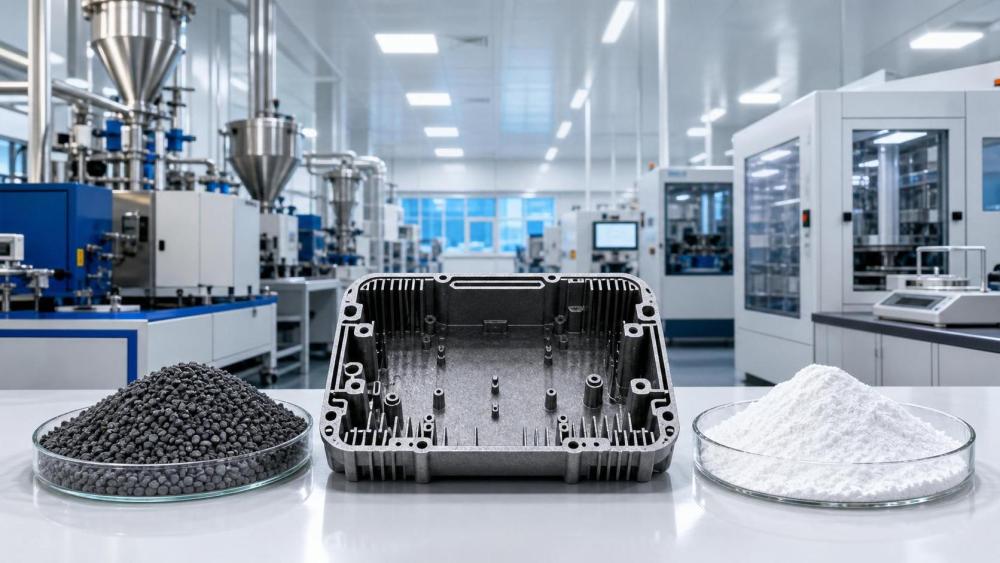
Thermal conductive compounds price now reflects a wider cost structure than many quote sheets suggest.
The old habit was simple: compare resin family, check price per kilogram, and push for discounts.
That approach breaks down when thermal management becomes a performance requirement, not a nice extra.
In electronics, EV systems, LED housings, battery modules, chargers, and industrial controls, thermal conductive compounds are expected to do several jobs at once.
They must transfer heat, hold dimensions, survive processing, meet safety targets, and stay consistent from batch to batch.
That is why thermal conductive compounds price depends on formulation design, not just polymer cost.
A material with higher thermal conductivity may need more expensive fillers, tighter dispersion control, and slower compounding conditions.
A lower quote can also hide tradeoffs in flow, brittleness, color stability, or certification support.
Across advanced polymers and modified compounds, APIM often frames pricing through application logic rather than list price alone.
That matters here, because thermal conductive compounds are engineered solutions, not commodity pellets.
What is really inside the price of a thermal conductive compound?
The biggest cost driver is usually filler technology.
Many thermal conductive compounds rely on boron nitride, aluminum oxide, magnesium oxide, graphite, or hybrid filler systems.
These are not interchangeable from a cost or processing perspective.
Higher filler loading often raises thermal performance, but it can also reduce flow and increase wear on compounding equipment.
The base polymer also matters more than expected.
A thermally conductive PA, PPS, PBT, PC, or TPU grade will not share the same price structure.
Heat resistance, moisture behavior, flame-retardant needs, and dimensional stability all influence the final formula.
Then there is compounding complexity.
Achieving stable filler dispersion may require specific screw designs, controlled feeding, melt filtration, vacuum degassing, and careful pelletizing.
APIM regularly highlights that process control and material consistency are tightly linked in functional compounds.
That link shows up directly in thermal conductive compounds price.
Testing and compliance add another layer.
UL recognition, RoHS, REACH, automotive validation, and application-specific thermal data all raise the commercial value of a grade.
So when two suppliers quote the same conductivity range, the hidden variables may still be significant.
A practical way to read the quote
It helps to separate the price into technical layers instead of treating it as one number.
Does higher thermal conductivity always mean a higher price?
Usually yes, but not in a straight line.
Moving from a low thermal conductivity grade to a mid-range grade may increase cost moderately.
Pushing toward higher conductivity levels often creates a steeper jump in thermal conductive compounds price.
That is because formulation efficiency declines as targets become more demanding.
More filler is needed, but excessive loading can damage impact strength, processability, and surface finish.
The supplier then compensates through better fillers, more complex additive packages, or tighter process control.
In practice, the real question is not the highest conductivity available.
The better question is the lowest conductivity that still protects product reliability.
For many housings and thermal interface-adjacent parts, over-specification is a common source of unnecessary cost.
APIM’s material comparisons across engineering plastics often show the same pattern.
The best-value material is rarely the one with the highest headline number.
Where the premium may be justified
- Dense electronics where heat buildup drives field failure risk.
- Battery-adjacent parts exposed to long duty cycles.
- Applications requiring electrical insulation and heat transfer together.
- Programs where thinner walls must still move heat efficiently.
Why can similar quotes behave very differently in production?
This is where many sourcing decisions go wrong.
Two compounds may show comparable data sheet conductivity, but their factory performance can be very different.
One grade may mold cleanly and hold tolerance.
Another may need higher pressure, longer cycles, and frequent tool maintenance.
So thermal conductive compounds price should be reviewed against total conversion cost.
There are several reasons for this gap.
- Filler shape influences flow behavior and anisotropic heat transfer.
- Poor dispersion can create inconsistent thermal paths.
- Abrasive compounds may increase screw, barrel, and mold wear.
- Some grades meet thermal targets but fail appearance or warpage expectations.
More careful teams often ask for processing windows, rheology data, and real application references before final comparison.
That is a stronger method than relying on one thermal conductivity figure.
It also fits the broader APIM approach of linking material properties with downstream manufacturing outcomes.
Which sourcing mistakes make thermal conductive compounds price look cheaper than it is?
The most common mistake is comparing by kilogram only.
A lower material price can be offset by scrap, slower output, part failure, or qualification delays.
Another mistake is ignoring test conditions.
Thermal conductivity values depend on method, direction, sample geometry, and conditioning.
Without that context, quote comparisons become misleading.
A third issue is underestimating lead-time risk.
Some thermal filler systems depend on narrow supplier bases and longer import cycles.
That affects not only price, but schedule reliability.
The short checklist below helps keep the review grounded.
How should you evaluate thermal conductive compounds price before making a final decision?
Start with the application, not the catalog.
Heat path, electrical insulation, wall thickness, environment, and compliance targets should be defined before requesting comparisons.
Then narrow the material set by realistic performance bands.
It is often more useful to compare three suitable grades than ten loosely related ones.
Next, build a landed-cost view.
Include material price, trial cost, tooling wear, scrap, cycle time, qualification effort, and supply risk.
That usually reveals whether the quoted thermal conductive compounds price is truly competitive.
It also helps to use structured information sources that connect formulation, processing, and application trends.
APIM is useful in that context because it organizes advanced polymer knowledge around performance, compounding behavior, and supply chain development.
That kind of context supports better technical discussions and fewer late-stage surprises.
In the end, thermal conductive compounds price is a decision signal, not the decision itself.
The next step is to map required conductivity, polymer family, certification scope, and processing limits into one comparison sheet.
Once those points are aligned, quotes become easier to judge, and sourcing choices become much more defensible.
Have questions about this sector analysis, or seeking best practices specific to your niche? Drop us a line below and let the senior consultants at APIM assist you.
We respect your privacy. Your information is strictly confidential.
Related News
- 00
0000-00
How does washing affect contamination in post-consumer recycled PP resins? - 00
0000-00
How does feedstock affect depolymerization equipment selection? - 00
0000-00
US Sets 213.44% Preliminary Antidumping Deposit on Chinese PTMEG - 00
0000-00
When should epoxy be used as a thermal interface material for semiconductors? - 00
0000-00
US Midterm Results Unlikely to Quickly Shift Recycled Plastics Market or Legislation