




How to Evaluate a Thermal Conductivity Polymers Supplier for EV Potting
How to Evaluate a Thermal Conductivity Polymers Supplier for EV Potting
Choosing the right thermal conductivity polymers supplier for EV potting is not just about material price.
Procurement teams need to balance thermal performance, insulation, processing behavior, compliance, and supply continuity.
In EV applications, a weak supplier decision can create field failures, qualification delays, and unexpected total cost.
This guide explains how to compare a thermal conductivity polymers supplier for EV potting in a practical way.
Why Supplier Evaluation Matters in EV Potting
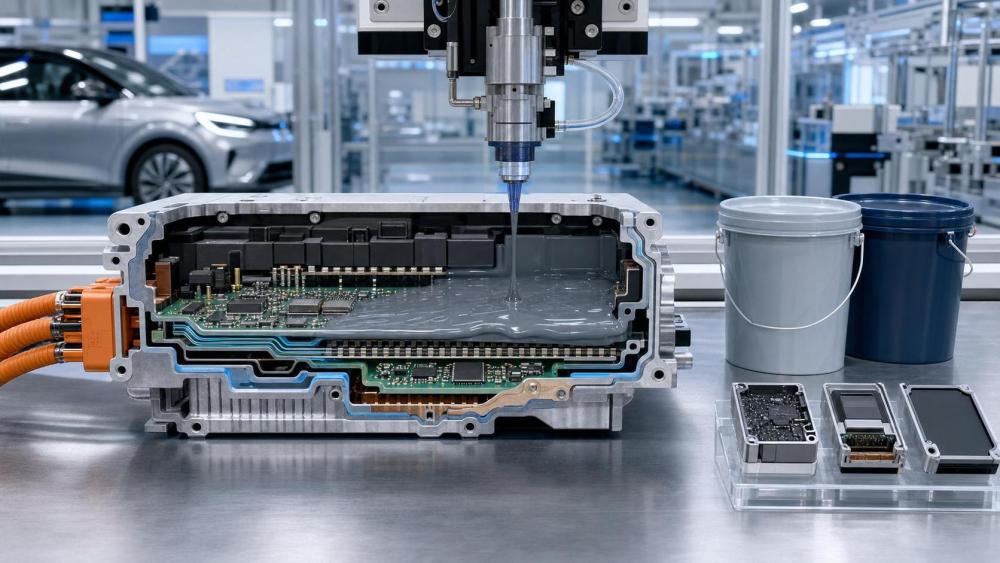
EV potting materials do more than fill space.
They help move heat away from sensitive electronics while protecting components from vibration, dust, moisture, and chemicals.
That is why the thermal conductivity polymers supplier affects both performance and long-term reliability.
Recent EV platform changes make this more important.
Power density is increasing, packaging space is tighter, and thermal margins are less forgiving.
A thermal conductivity polymers supplier that only competes on price may not support these conditions.
In practice, buyers should evaluate material fit and supplier capability together.
Start with Application Fit, Not a Generic Data Sheet
Not every thermally conductive polymer is suitable for every EV potting application.
A serious thermal conductivity polymers supplier should first ask detailed application questions.
Those questions usually include component type, operating temperature, cure profile, housing geometry, and dielectric requirements.
For example, potting for onboard chargers differs from potting for battery management systems.
The heat load, gap size, flow demands, and electrical exposure can vary significantly.
If a thermal conductivity polymers supplier pushes one grade for every use case, that is a warning sign.
Better suppliers discuss tradeoffs openly.
- Higher thermal conductivity may increase viscosity.
- Lower hardness may improve stress absorption.
- Faster cure may reduce cycle time but shorten processing window.
- High filler loading may affect pumpability and void control.
This early technical discussion often reveals whether the supplier understands EV potting or simply sells compounds.
Check the Thermal and Electrical Performance Behind the Claim
Thermal conductivity values can look impressive on paper, but test methods matter.
A capable thermal conductivity polymers supplier should explain how data was measured and under what conditions.
Ask for full property profiles, not only one headline number.
- Thermal conductivity in W/mK
- Volume resistivity
- Dielectric strength
- CTE and dimensional stability
- Glass transition or service temperature range
- Water absorption and chemical resistance
- Flame retardancy, such as UL 94 ratings
In EV electronics, thermal performance without insulation is not enough.
Likewise, good dielectric strength means little if the material traps heat.
The right thermal conductivity polymers supplier should show balanced performance, not isolated numbers.
It also helps to ask for aging data.
Heat cycling, humidity exposure, and chemical contact often reveal weaknesses that initial lab results miss.
Evaluate Process Stability and Manufacturing Support
A thermal conductivity polymers supplier should support stable production, not just sample approval.
This is where many sourcing decisions become expensive later.
For EV potting, process stability affects dispense accuracy, bubble control, cycle time, and rework rates.
Ask the supplier about these practical points.
- Viscosity range and batch-to-batch consistency.
- Pot life and cure speed under your factory conditions.
- Sedimentation risk during storage and use.
- Compatibility with dispensing equipment.
- Void formation risk in deep or narrow cavities.
- Rework limitations after cure.
A reliable thermal conductivity polymers supplier should also provide processing guidance.
That may include recommended mixing conditions, degassing methods, storage controls, and cure schedules.
From a procurement standpoint, this reduces startup risk and speeds supplier onboarding.
Review Certifications, Documentation, and Change Control
A thermal conductivity polymers supplier for EV potting must be document-ready.
This matters even more when customer audits or automotive qualification programs are involved.
At minimum, review technical and regulatory support in detail.
- TDS and SDS completeness
- REACH and RoHS status
- UL documentation, if relevant
- Automotive quality systems, such as IATF-related support
- Lot traceability and COA availability
- Formal PCN process for formulation or raw material changes
This is not paperwork for its own sake.
A weak change control process can invalidate testing and force unexpected requalification costs.
A disciplined thermal conductivity polymers supplier will define change notification timing and approval steps clearly.
Assess Supply Reliability and Total Cost, Not Unit Price Alone
Price still matters, especially under EV cost pressure.
But the lowest quote from a thermal conductivity polymers supplier may create the highest landed cost.
Procurement decisions should include supply resilience and usage economics.
A strong thermal conductivity polymers supplier should discuss capacity planning honestly.
That includes regional warehousing, emergency supply, and support during production transfers.
In actual business terms, consistency often saves more money than a small unit price reduction.
Use a Supplier Scorecard Before Final Selection
When several suppliers appear qualified, a scorecard helps make the decision cleaner.
This also creates alignment across procurement, engineering, and quality teams.
A practical thermal conductivity polymers supplier scorecard can include:
- Thermal and dielectric performance
- Processing stability in pilot runs
- Documentation quality
- Responsiveness during technical review
- Capacity and logistics readiness
- Commercial terms and total cost
- Change control and long-term partnership fit
It is useful to weight categories based on actual risk.
For safety-critical EV parts, technical stability should usually outrank short-term price gains.
That approach leads to a better thermal conductivity polymers supplier decision over time.
Final Takeaway
The best thermal conductivity polymers supplier for EV potting is rarely the one with the cheapest quote.
The better choice is the supplier that can prove material fit, stable processing, reliable documentation, and dependable supply.
That is what lowers sourcing risk and protects product reliability.
Before finalizing any sourcing program, compare each thermal conductivity polymers supplier against the same technical and commercial checklist.
A disciplined evaluation process makes negotiations sharper and supplier selection more defensible.
In a fast-moving EV market, that kind of clarity is a purchasing advantage.
Have questions about this sector analysis, or seeking best practices specific to your niche? Drop us a line below and let the senior consultants at APIM assist you.
We respect your privacy. Your information is strictly confidential.
Related News
- 00
0000-00
Do polyolefin hot melt adhesives bond well to polyethylene? - 00
0000-00
Korean Study Finds PLA Barely Degrades in Landfill After 320 Days - 00
0000-00
How to assess batch consistency from a thermal potting compounds supplier - 00
0000-00
How much weight can carbon fiber reinforced plastics save in cars? - 00
0000-00
Switching from PS to ABS Sheet Extrusion: Equipment Checks