




How to Choose Silicone Thermally Conductive Adhesives for Heat-Sensitive Assemblies
Selecting silicone thermally conductive adhesives for heat-sensitive assemblies is rarely a simple thermal question. The material must move heat away from fragile parts while avoiding cure stress, contamination, excessive modulus, and process variation.
That balance matters across electronics, automotive modules, medical devices, sensors, lighting units, battery components, and compact industrial systems. In each case, thermal management and substrate protection have to work together, not compete.
For companies tracking advanced materials through APIM, this topic sits at the intersection of adhesive chemistry, polymer behavior, assembly design, and long-term reliability. Good selection starts with understanding what the adhesive must do in the real operating environment.
What makes these adhesives different
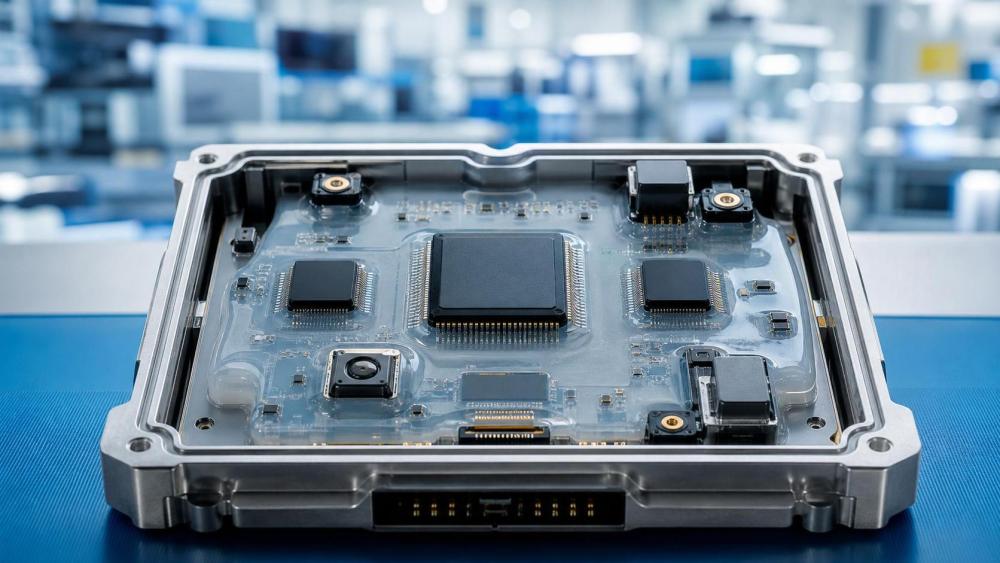
Silicone thermally conductive adhesives combine bonding and heat transfer in one material layer. They are formulated to conduct heat better than standard silicones while keeping the elasticity and temperature resistance that silicone chemistry is known for.
Unlike rigid epoxy systems, silicone-based thermal adhesives usually accommodate differential expansion more effectively. That is important when ceramic, metal, glass, engineered plastics, and semiconductor packages move at different rates during heating and cooling.
In heat-sensitive assemblies, the adhesive often protects as much as it bonds. A softer, more compliant bond line can reduce stress on thin substrates, wire bonds, miniature sensors, optical elements, and low-mass electronic parts.
Why selection has become more critical
Assemblies are getting smaller, hotter, and more integrated. Designers are also replacing metal housings and mechanical fasteners with engineered plastics, specialty films, and lightweight composite structures.
That shift creates tighter thermal margins and more mixed-material interfaces. A thermally conductive adhesive now affects heat dissipation, electrical insulation, vibration durability, assembly speed, and service life at the same time.
Silicone thermally conductive adhesives are therefore evaluated less as commodity consumables and more as engineered materials. Their behavior must align with the substrate, the dispensing process, the cure profile, and the final reliability target.
Key properties that deserve close attention
Thermal conductivity is the obvious starting point, but it is not the only decision point. A higher conductivity grade does not automatically deliver a better assembly outcome.
Bond line thickness matters because heat transfer depends on both conductivity and path length. A very conductive adhesive applied too thick may perform worse than a moderate grade with a controlled thin bond line.
Modulus and elongation matter because fragile assemblies react poorly to rigid materials. Lower stress during cure and thermal cycling often protects solder joints, dies, lenses, and thin polymer substrates.
Cure mechanism also changes risk. Addition-cure silicones are often preferred where low by-product release and stable cure behavior are important. Condensation-cure systems may fit less sensitive assemblies but need closer compatibility review.
Adhesion should be checked against the real surface condition, not only the base substrate name. Aluminum, anodized surfaces, coated metals, LCP, PA, PBT, ceramics, glass, and treated films can behave very differently.
A practical comparison framework
Where heat-sensitive assemblies create special risk
The most demanding cases usually combine small thermal mass with limited mechanical tolerance. A component may survive operating heat but fail because the bonding material shrinks, hardens, or pulls unevenly.
This is common in camera modules, compact sensors, LED packages, battery monitoring boards, wearable electronics, and precision medical cartridges. Thin-wall housings and miniaturized connectors add further sensitivity.
Silicone thermally conductive adhesives are often chosen here because they remain flexible over broad temperature ranges. Even so, softness alone is not enough if outgassing, cure inhibition, or poor surface wetting are overlooked.
Typical failure modes to screen early
- Voids that interrupt thermal pathways and raise junction temperature
- Adhesion loss after humidity exposure or thermal shock
- Pump-out or movement under repeated expansion cycles
- Silicone contamination risk near optics, contacts, or coating steps
- Unexpected substrate cracking caused by excessive cured stiffness
How to match the adhesive to the assembly
Start with the thermal path, not the product datasheet headline. Determine the heat source, the acceptable component temperature, the gap to be filled, and whether the adhesive is also carrying structural load.
Then review the substrate set as a system. A bond between aluminum and a glass-filled engineering plastic behaves differently from a bond between copper and ceramic or stainless steel and PET film.
Process conditions should follow immediately after material screening. Dispensing pressure, mix ratio stability, working time, moisture exposure, fixture needs, and cure temperature all influence whether silicone thermally conductive adhesives perform consistently in production.
From an APIM-style materials evaluation perspective, this is where polymer knowledge and manufacturing knowledge meet. Filler chemistry, silicone backbone design, and process control all shape the finished bond line.
Questions that sharpen selection
- Is the priority heat transfer, mechanical attachment, sealing, or all three?
- How much cure heat can the assembly tolerate?
- Will the adhesive contact coatings, films, gels, or low-energy plastics?
- Does the design require rework, inspection, or automated dispensing?
- What reliability tests actually reflect field conditions?
Industry use cases behind current demand
In consumer electronics, silicone thermally conductive adhesives help bond heat-generating parts to compact frames without adding rigid fasteners. Thin housings and mixed-material assemblies make compliance especially valuable.
In automotive electronics, they support sensors, power modules, lighting, and battery-related components exposed to vibration, humidity, and broad temperature swings. Long-term adhesion stability becomes as important as initial conductivity.
Medical and industrial devices often add another layer of caution. Sensitive plastics, specialty films, and precision modules may require low-stress cure behavior, controlled outgassing, and predictable lot-to-lot consistency.
These use cases explain why advanced materials platforms increasingly treat silicone thermally conductive adhesives as part of a wider system decision. The adhesive interacts with polymers, substrates, and manufacturing equipment across the value chain.
Testing priorities before approval
Lab screening should move beyond lap shear alone. Thermal impedance, cured hardness, compression behavior, dielectric performance, and aging under humidity or cycling often reveal more relevant differences.
Cross-sectional inspection is useful for checking voids and bond line control. In many assemblies, the best silicone thermally conductive adhesives are the ones that create the most stable process window, not the highest single test result.
Supplier data should also be read carefully. Test method, substrate type, cure condition, and sample thickness can heavily influence reported conductivity and adhesion values.
Useful validation checkpoints
- Compare performance at production bond line thickness
- Check compatibility with primers, coatings, and cleaning residues
- Run thermal cycling and humidity aging on assembled parts
- Measure dispensing repeatability over the expected working life
- Review supply consistency, documentation, and change-control practice
A better next step than choosing by datasheet alone
The strongest selection process turns application needs into a short list of measurable requirements. Thermal target, substrate map, cure limit, mechanical stress tolerance, and reliability conditions should be defined before comparing candidate grades.
That approach makes discussions with material suppliers more precise and reduces late-stage surprises. It also fits the broader APIM view that advanced materials should be judged through performance logic, processing reality, and business risk together.
When silicone thermally conductive adhesives are evaluated this way, the decision becomes clearer: choose the material that preserves the assembly while delivering the required thermal path, not simply the one with the boldest conductivity claim.
Have questions about this sector analysis, or seeking best practices specific to your niche? Drop us a line below and let the senior consultants at APIM assist you.
We respect your privacy. Your information is strictly confidential.
Related News
- 00
0000-00
Do polyolefin hot melt adhesives bond well to polyethylene? - 00
0000-00
Korean Study Finds PLA Barely Degrades in Landfill After 320 Days - 00
0000-00
How to assess batch consistency from a thermal potting compounds supplier - 00
0000-00
How much weight can carbon fiber reinforced plastics save in cars? - 00
0000-00
Switching from PS to ABS Sheet Extrusion: Equipment Checks