




Structural Adhesive Systems: When PU Outperforms Mechanical Fastening
Structural Adhesive Systems: When PU Outperforms Mechanical Fastening
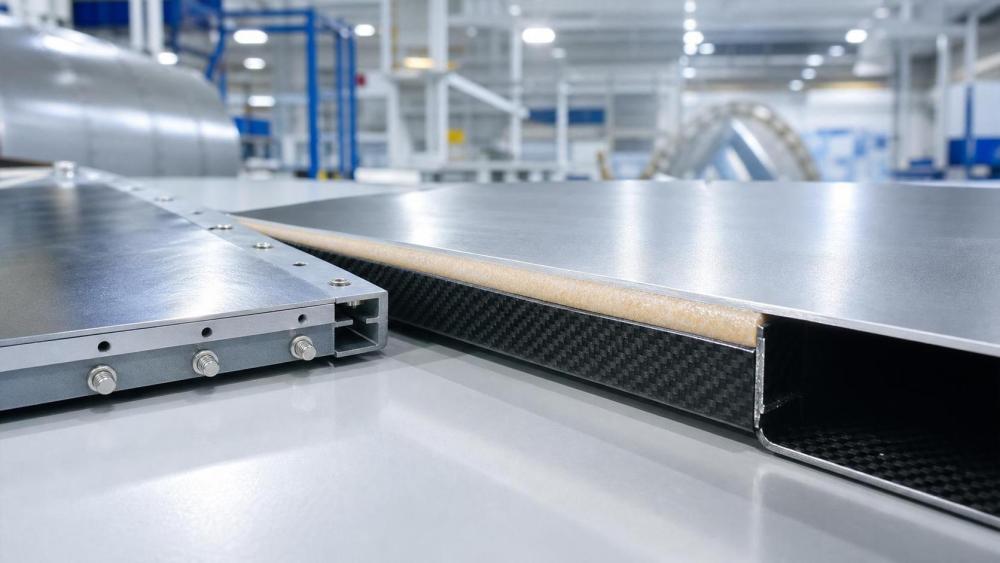
In modern manufacturing, structural adhesive systems have moved far beyond backup joining methods.
They now support lightweight design, cleaner surfaces, better load transfer, and fewer assembly limitations.
That shift matters when a project must balance durability, throughput, appearance, and total installed cost.
Among these options, polyurethane stands out in many real production environments.
PU does not win every comparison.
But in many applications, structural adhesive systems based on PU outperform bolts, screws, and rivets in ways that directly affect project results.
The key is knowing where that advantage is real, measurable, and worth designing around.
Why Mechanical Fastening Reaches Its Limits
Mechanical fastening remains familiar, fast to specify, and easy to inspect.
It also fits legacy production lines and standard quality procedures.
Still, those benefits come with technical tradeoffs that become harder to ignore.
A drilled hole interrupts fibers, reduces section strength, and creates local stress concentration.
A rivet or screw also adds weight, especially in large assemblies with repeated connection points.
In mixed-material assemblies, metal fasteners can drive galvanic corrosion or thermal mismatch problems.
Visible heads, flange distortion, and seal leakage add another layer of concern.
From a project perspective, rework and tolerance control often become the hidden cost center.
This is exactly where structural adhesive systems begin to look less like an alternative and more like a design tool.
Where PU-Based Structural Adhesive Systems Gain an Edge
Polyurethane performs best when a joint must carry load and absorb movement at the same time.
Unlike rigid fastening points, PU spreads stress across a wider bond area.
That reduces peak stress and helps protect brittle substrates, thin panels, and composite surfaces.
More importantly, PU combines structural strength with controlled flexibility.
This matters when assemblies face vibration, impact, thermal cycling, or differential expansion.
In practical terms, structural adhesive systems based on PU often outperform mechanical fastening in five conditions:
- Large bond surfaces where load distribution matters more than point clamping.
- Mixed-material joints such as metal-to-composite or plastic-to-metal assemblies.
- Applications exposed to vibration and fatigue over long service intervals.
- Visible parts that require smooth surfaces and no fastener marks.
- Assemblies that need bonding and sealing in one process step.
That combination changes both part design and manufacturing flow.
Typical Applications Where PU Beats Bolts and Rivets
In vehicle assembly, PU is widely used for body panels, roof modules, battery housings, and lightweight composite structures.
The reason is not only strength.
It is also noise reduction, fatigue resistance, and better performance under dynamic loading.
In construction panels and insulation systems, structural adhesive systems simplify assembly while improving thermal continuity.
Mechanical fastening can create thermal bridges and water entry points.
PU helps avoid both when the joint design is correct.
In appliances and industrial equipment covers, PU supports clean exterior surfaces without local panel deformation.
For electronics housings and module assemblies, it can also improve vibration control and environmental sealing.
Even in transportation interiors, PU helps bond dissimilar materials while protecting appearance quality.
Across these cases, the pattern is consistent.
When the joint must do more than hold parts together, structural adhesive systems become much more competitive.
Performance Factors That Matter During Evaluation
A good adhesive decision starts with the service environment, not with the product brochure.
PU can be highly effective, but only if the joint requirements are clear.
The most useful evaluation criteria usually include:
- Substrate compatibility, including metals, coated surfaces, composites, and engineering plastics.
- Expected loads, including shear, peel, impact, and fatigue cycles.
- Operating temperature range and thermal expansion differences.
- Moisture, chemical, and weather exposure over the intended life cycle.
- Cure speed, fixture time, and line takt requirements.
- Inspection method and process repeatability.
This is where many teams make a costly shortcut.
They compare adhesive tensile strength against bolt pull-out strength and stop there.
That is too narrow for structural adhesive systems.
Real performance depends on joint geometry, adhesive thickness, surface condition, cure profile, and loading direction.
A well-designed PU bond can outperform a mechanically fastened joint even when the raw numbers look less dramatic on paper.
Decision Table: PU vs Mechanical Fastening
This comparison shows why no single joining method wins everywhere.
But it also makes clear where structural adhesive systems create practical value.
Common Risks and How to Control Them
PU is not a plug-and-play replacement for every fastener.
The main risks usually come from process discipline, not adhesive chemistry alone.
Surface contamination is a common failure source.
Oil, release agents, oxidation, or inconsistent pretreatment can sharply reduce bond strength.
Joint design is another issue.
Adhesives handle shear better than peel, so geometry must support the right load path.
Cure conditions also need attention, especially in humid, cold, or variable production environments.
To reduce implementation risk, focus on a short control list:
- Define the exact substrate stack and surface preparation route.
- Validate joint geometry with real loading conditions.
- Run cure and fixture trials under line conditions.
- Set process windows for bead size, open time, and compression.
- Use durability testing that reflects service reality, not only lab snapshots.
With those controls in place, structural adhesive systems become much easier to scale.
How to Decide in an Active Project
In live projects, the best question is rarely, “Is PU stronger than a bolt?”
A better question is, “Which joining method gives the best system outcome?”
That system outcome includes part count, assembly time, appearance, sealing, fatigue life, and warranty risk.
From that angle, structural adhesive systems often unlock value that hardware-only comparisons miss.
PU is especially compelling when a project needs lightweight construction, lower vibration, cleaner design, or hybrid materials.
It is less compelling when quick disassembly, instant full handling strength, or simple field repair dominates the requirement.
That is why early evaluation matters.
Review the joining method before tooling is frozen and before inspection logic is locked.
When that happens early enough, PU-based structural adhesive systems can improve performance and simplify production at the same time.
The practical next step is straightforward.
Map the load case, substrate mix, environmental exposure, and assembly sequence, then test PU against fastening on the full joint design.
That approach turns structural adhesive systems from a concept discussion into a decision based on application reality.
Have questions about this sector analysis, or seeking best practices specific to your niche? Drop us a line below and let the senior consultants at APIM assist you.
We respect your privacy. Your information is strictly confidential.
Related News
- 00
0000-00
How does washing affect contamination in post-consumer recycled PP resins? - 00
0000-00
How does feedstock affect depolymerization equipment selection? - 00
0000-00
US Sets 213.44% Preliminary Antidumping Deposit on Chinese PTMEG - 00
0000-00
When should epoxy be used as a thermal interface material for semiconductors? - 00
0000-00
US Midterm Results Unlikely to Quickly Shift Recycled Plastics Market or Legislation